A shop chatbot for the store you already run
Whatever builder, theme, or stack your shop lives on, Asyntai drops in as a single snippet and starts answering buyers the same afternoon — in their language, with context from your own catalog.
Point the shop chatbot at your storefront
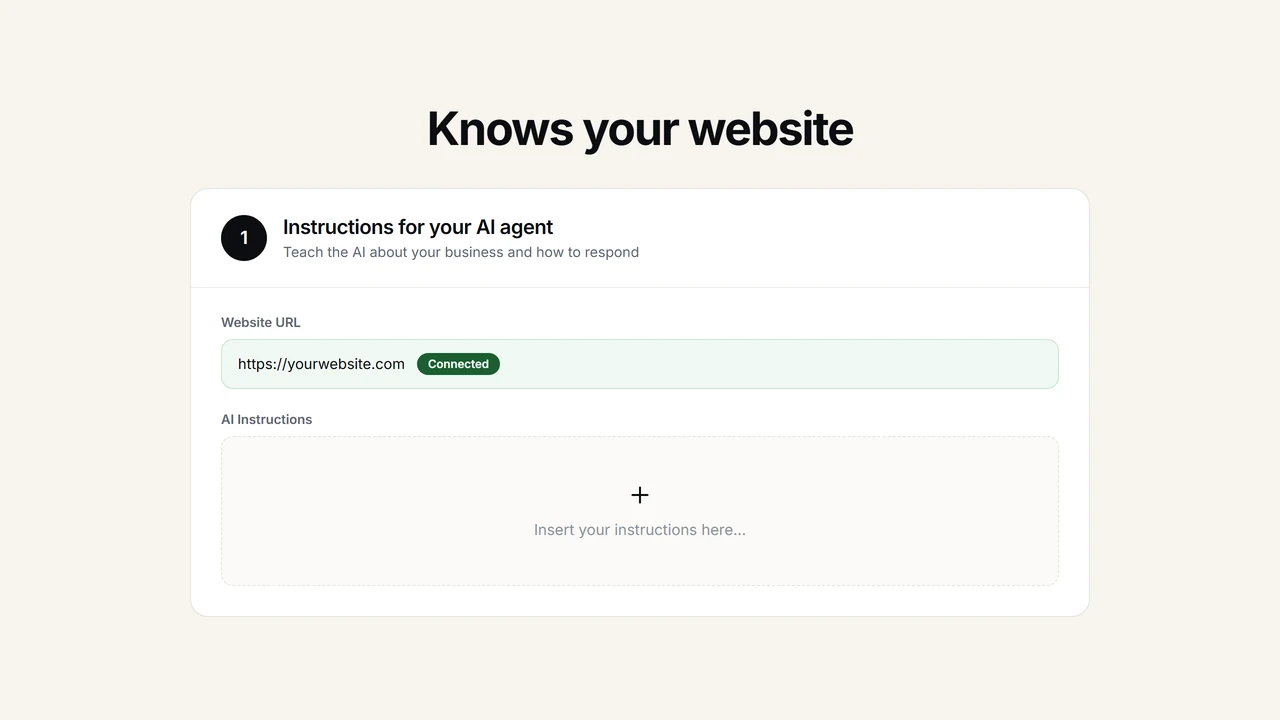
Drop your shop URL below — you'll see how the assistant would talk to your buyers before you sign anything
Platform-agnostic, on purpose
Most shop chatbot tools assume you're on a specific cart software and quietly break if you aren't. Asyntai is deliberately platform-free — one small script, no plugin directory, no theme dependency, no ecosystem to pick sides in.
- Runs on whatever your shop runs onStatic site, self-hosted cart, a builder you inherited, a custom CMS your cousin made — if it renders HTML, the shop chatbot attaches to it.
- No app store middlemanNothing gets installed through a marketplace review process. You paste the snippet, save the page, and the assistant is answering buyers.
- WooCommerce gets extra syncFor shops on WooCommerce, the AI chatbot for WooCommerce adds an optional REST API link that pulls live product and stock data on top of the crawl, so prices and availability stay accurate as you edit them.
Handles the questions that used to eat your evenings
A small shop's inbox is usually full of the same handful of buyer questions asked differently every time. The shop chatbot soaks those up first so you only see the ones that actually need you — the escalations, the custom orders, the interesting ones.
- Opens itself at the right momentAn optional auto-trigger nudges the chat open after a chosen delay, so a browsing buyer sees help before they wander off to a marketplace instead.
- Turns lurkers into follow-upsMid-conversation, the assistant can gently collect an email or phone. Those contacts show up as leads in the dashboard, and optionally trigger an email to you with the full thread attached.
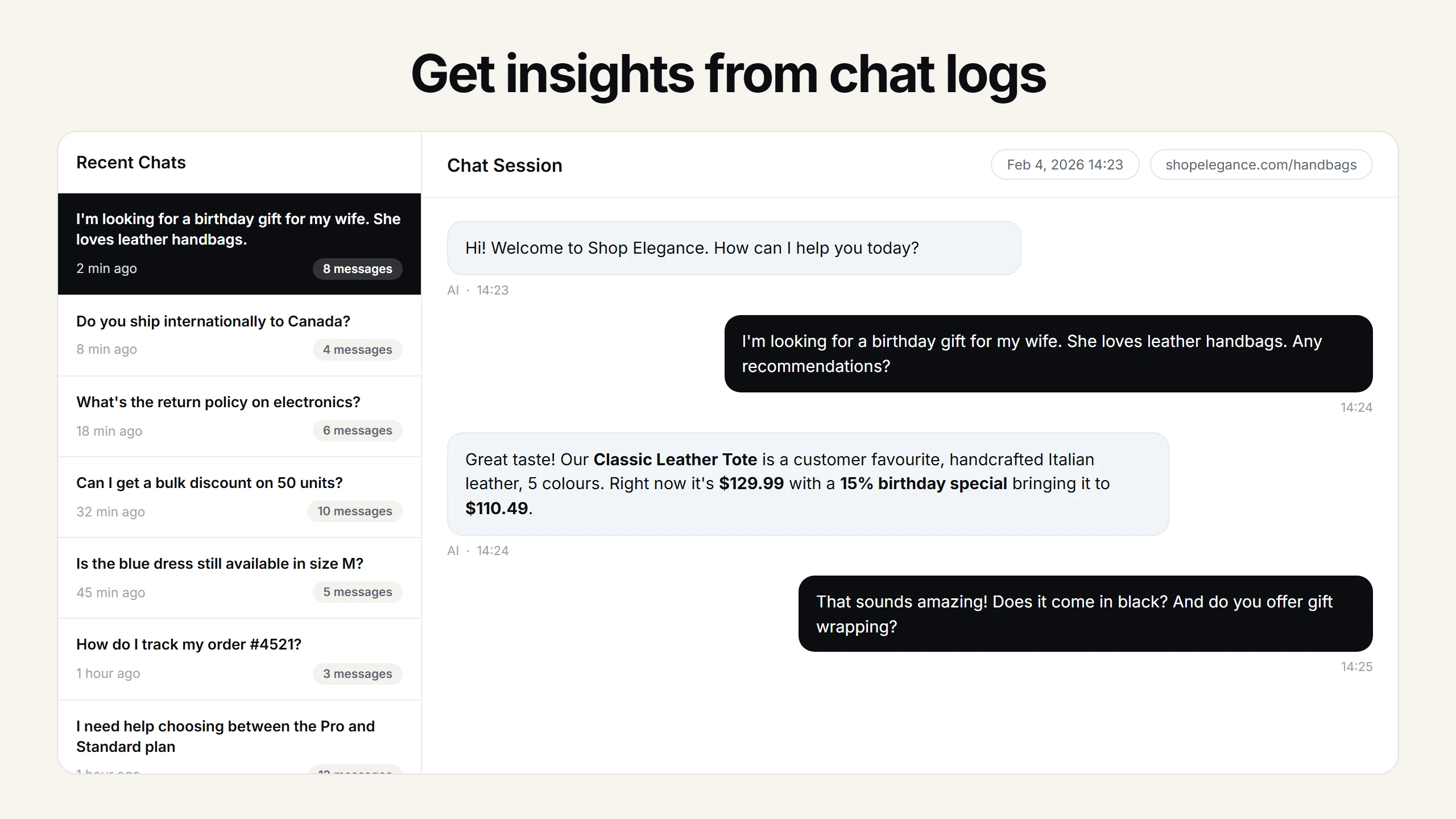
- Shows you what buyers actually wonderEvery chat is logged. Analytics surface recurring topics, so you can patch a product page or add a missing FAQ after the third time the same fit question comes up.
Live on your shop before lunch
No app marketplace, no plugin submission, no waiting on a developer. The shop chatbot is a short JavaScript tag you can paste into almost any shop template in under a minute.
- Create a free Asyntai account and grab the snippet from your dashboard.
- Open the main template or footer partial of your shop where scripts belong.
- Paste the snippet right before the closing
</body>tag so it loads last. - Publish — the shop chatbot is live across every page of the storefront from that moment.
<script src="https://asyntai.com/widget.js"
data-id="your-shop-id" async>
</script>
</body>
# One line. One shop. Done.
Shop chatbot — the honest answers
Questions indie sellers and small shop owners tend to ask before they commit.
I run a tiny shop — is this overkill?
No. The free tier gives you 50 messages a month, which is plenty for a niche catalog or a weekend-drop brand. You only move to paid once buyers are actually using the chat enough to matter, and the first paid step is $39 per month for 800 messages.
My shop isn't on Shopify or WooCommerce. Does it still work?
Yes — that's kind of the point of a platform-agnostic shop chatbot. If the storefront serves HTML in a browser, the snippet attaches. Squarespace, Wix, Ecwid, a raw Webflow build, a Notion-backed store, an old PrestaShop, something handrolled in Django — it all works the same way.
How does the AI learn what's in my shop?
You hand over the shop URL and Asyntai reads the public pages — products, categories, policies, about-the-maker copy. For the things that don't live on the site (a craft sheet, sourcing notes, a care guide you email buyers privately), you upload those as files or paste them into the knowledge base.
Will it feel like a bot or like someone from my brand?
You set the tone through custom instructions. Tell the shop chatbot to speak warmly, to sign off a certain way, to always mention your small-batch process, to recommend pairing items — it follows the rules you write in plain language, no scripting required.
What about international buyers?
The widget interface covers 36 languages, and the AI switches to whatever language the buyer writes in. A Dutch buyer gets Dutch, a Mexican buyer gets Spanish, a Taiwanese buyer gets Traditional Chinese — you do nothing, it just happens.
Does it load fast? My product images are already heavy.
The script is async, so it loads after the rest of the shop has painted. Buyers see your product photos first, the chat bubble arrives quietly in the corner a moment later.
Can I connect it to more than one shop?
Yes, depending on plan. Free covers one shop, Starter two, Standard three, Pro up to ten separate shops — each answering from its own catalog, each with its own chat history.
What if I want the chatbot to recognise returning customers?
On the Standard and Pro plans, you can pass signed user context from your shop through window.Asyntai.userContext. The assistant then knows the buyer by name, by membership tier, or by whatever attributes you share, and greets them accordingly.
A calmer take on putting a chatbot on your shop
Running a small shop in the current era is a lot of plate-spinning. You're packing orders, answering the same three sizing questions, chasing a supplier about a late restock, trying to photograph a new drop in the last hour of good daylight, and somewhere in the middle of that a buyer on the other side of the world sends a DM asking whether the green one is in stock. A shop chatbot isn't about making your store feel more corporate; it's about giving you one less thing to juggle while the store keeps talking to buyers in your voice. That's the frame this page is written from — not enterprise AI, not chatbot-as-funnel, just a quiet assistant working behind the counter while you go make dinner.
The reason platform-agnostic matters here is simple: the shops that benefit most from a chatbot are almost never on a single tidy stack. One shop is a Squarespace site with a Stripe button. Another is a Ghost blog with a Snipcart cart glued onto it. Another is a WooCommerce install someone's brother set up four years ago. Another is a raw HTML site powered by a handful of Gumroad links. A shop chatbot tied to a specific platform leaves all of those sellers out. Asyntai is built around the snippet — a short piece of script you drop into any HTML page — so the decision about whether to add an assistant doesn't have to turn into a re-platforming project. Whatever you're on, you stay on, and the chatbot just shows up.
Training is where a lot of small shop owners expect the wheels to come off, because in most tools training means filling spreadsheets of intents and example phrases. Here it means pasting a URL. Asyntai crawls the shop, reads the product pages, reads the about page, reads whatever policies are linked in the footer, and holds all of it as context the assistant can draw from. When a buyer asks about return windows, it quotes the return page. When a buyer asks about the artist behind a piece, it pulls from your about copy. When a buyer asks about shipping to Portugal, it checks the shipping section before answering. If something important about your shop lives only in your head — the way you handle custom engraving, the exact timeline for made-to-order pieces, a seasonal pause while you're away at a trade fair — you type that into the knowledge base and the chatbot treats it as fact from then on.
Where the WooCommerce REST API sync earns its keep is on shops that change stock and pricing often. The base crawl gives the assistant your catalog as a snapshot, which is fine for shops that add a product every few weeks. For higher-velocity shops — a resale boutique where pieces sell once and vanish, a pre-order shop where allocations update daily, a shop running frequent sales — the REST API link keeps the assistant current without a manual re-crawl. That's an optional connection, not a requirement. Stores on other carts stay on the crawl, and the crawl itself is refreshed on a schedule so drift doesn't build up.
Small shops and boutique brands tend to build loyalty on voice. The worst thing a chatbot can do is flatten that voice into something generic and corporate. Asyntai handles this through custom instructions — a free-form block where you write, in your own words, how the assistant should speak. A ceramic studio might write "speak with care and never rush the buyer, mention that every piece is kiln-fired in our shared studio in Porto". A vinyl shop might write "always include the catalog number and the pressing year when discussing a record". A coffee roaster might write "use tasting notes before price, and mention the farm's name at least once in every product recommendation". The shop chatbot follows those instructions the way a well-briefed junior staffer would, and the buyer on the other side of the screen feels like they're talking to the shop, not to a generic helpdesk.
Language is worth dwelling on because it's where smaller shops often lose sales quietly. You might ship internationally, have a beautiful product, have fair prices — and still lose a Japanese buyer because they typed a question in Japanese and your English-only chat widget responded with a template reply that didn't quite land. The shop chatbot widget renders in 36 languages, and the underlying model answers in whatever language the buyer opens with. You don't set anything. You don't pick locales. You don't translate a script. A Brazilian buyer writes Portuguese, gets Portuguese. A Finnish buyer writes Finnish, gets Finnish. The shop keeps selling through hours and continents you never personally cover.
Proactive behaviour is the next thing that tends to move the needle. A buyer who's been lingering on a product page for sixty seconds is, statistically, weighing something. Maybe the fit. Maybe the shipping. Maybe whether they actually trust the shop. An optional auto-trigger opens the chat after a delay you pick — fifteen seconds, forty-five, a full minute, whatever fits your catalog — with an opener message you write yourself. That small nudge pulls some of those silent hesitations into an actual conversation, which is where the shop chatbot can answer the unasked question before the buyer closes the tab. Smaller shops tend to get better results with gentler openers (a friendly "Hey, any questions about this piece?" rather than a pushy "DISCOUNT INSIDE!"), but you decide the copy.
Leads are where the shop chatbot quietly pays for itself even on conversations that don't close. The assistant is configured to ask for contact details where appropriate — an email, a phone number, or both — usually near the end of a chat or when a buyer asks something that genuinely needs a human follow-up (a custom size, a bulk order, a delayed shipment concern). Those captured leads show up in your Asyntai dashboard with the whole chat attached, and if you switch on email notifications you also get them pushed to your inbox as they happen. Small shops with no CRM tend to just run this into their regular email and follow up by hand; bigger shops can forward into whatever tools they already use. Either way, a buyer who would have vanished becomes a name, a chat transcript, and a second chance at the sale.
On pricing, the design goal is that no one should ever feel priced out of trying this. The free plan is 50 messages a month with no card required, which is enough to sanity-check whether buyers on your shop actually engage with a chat widget. If they do, the first paid step is $39 per month for 800 messages, which covers a lot of hobby shops and early-stage brands for a long time. Higher tiers exist for shops running real chat volume, and the number of shops you can connect scales with tier too — one on free, two on Starter, three on Standard, ten on Pro. The shop chatbot pauses cleanly if you hit your monthly cap; you get warning emails in advance, and either the next cycle rolls over or you bump the tier.
Analytics on a shop chatbot are weirdly underrated. Everyone focuses on how the AI answers, almost no one looks at what buyers keep asking — which is, if you think about it, the single most useful dataset a small shop can collect. If three separate buyers asked whether your wool sweaters itch, your product page needs a sentence about the fiber. If buyers keep asking where you ship from, add it to the footer. If two buyers in a week asked whether you do gift wrapping, that's maybe a new checkout option worth adding. The shop chatbot isn't just a wall between you and repetitive questions; it's also a slow-burning research panel on your own shop that you can skim for ten minutes a week and consistently find something worth fixing.
For shops selling to the same buyers repeatedly — members, subscribers, patrons, returning customers — the User Context feature on Standard and Pro is where things get more interesting. Your shop signs a small payload identifying who the logged-in buyer is (name, tier, whatever you want to share), and passes it through the widget's JavaScript hook. The assistant then greets them by name, knows their order history if you choose to include it, knows whether they're on a subscription, and can adapt recommendations accordingly. It's the kind of touch that keeps a small brand feeling small and personal even as it scales past the point where you could realistically remember every repeat buyer on sight.
A last word on what a shop chatbot isn't. It's not a replacement for craft. It's not a replacement for good photography, thoughtful product descriptions, or honest pricing. If the shop itself isn't convincing, no chatbot will rescue it. What a shop chatbot does is recover the sales you were losing to silence — the buyer who'd have bought if one question had been answered, the international buyer who'd have bought in their own language, the late-night browser who'd have bought if someone had been awake to confirm a detail. Everything else about your shop still has to work. This just stops the quiet, invisible leak at the bottom of the funnel, and gives you back the evenings you were spending on the same sizing question from five different people.