A multilingual customer support chatbot, set up once, speaking 36 languages
Asyntai reads your site in whatever language you write it in, then replies to each visitor in their own — across 36 languages, with the same brand voice, from a single installation.
Try the multilingual customer support chatbot on your site
Drop your URL in and watch the chatbot answer a support question in English, Spanish, German, and Japanese
Write your help content once. Serve every market.
A multilingual customer support chatbot is only useful if it doesn't double your content workload. Asyntai takes your existing help pages — usually in English — and uses them as the single source of truth. When a shopper asks a question in Italian, the AI reads your English knowledge base and answers in Italian. You never have to maintain twelve parallel FAQ sites.
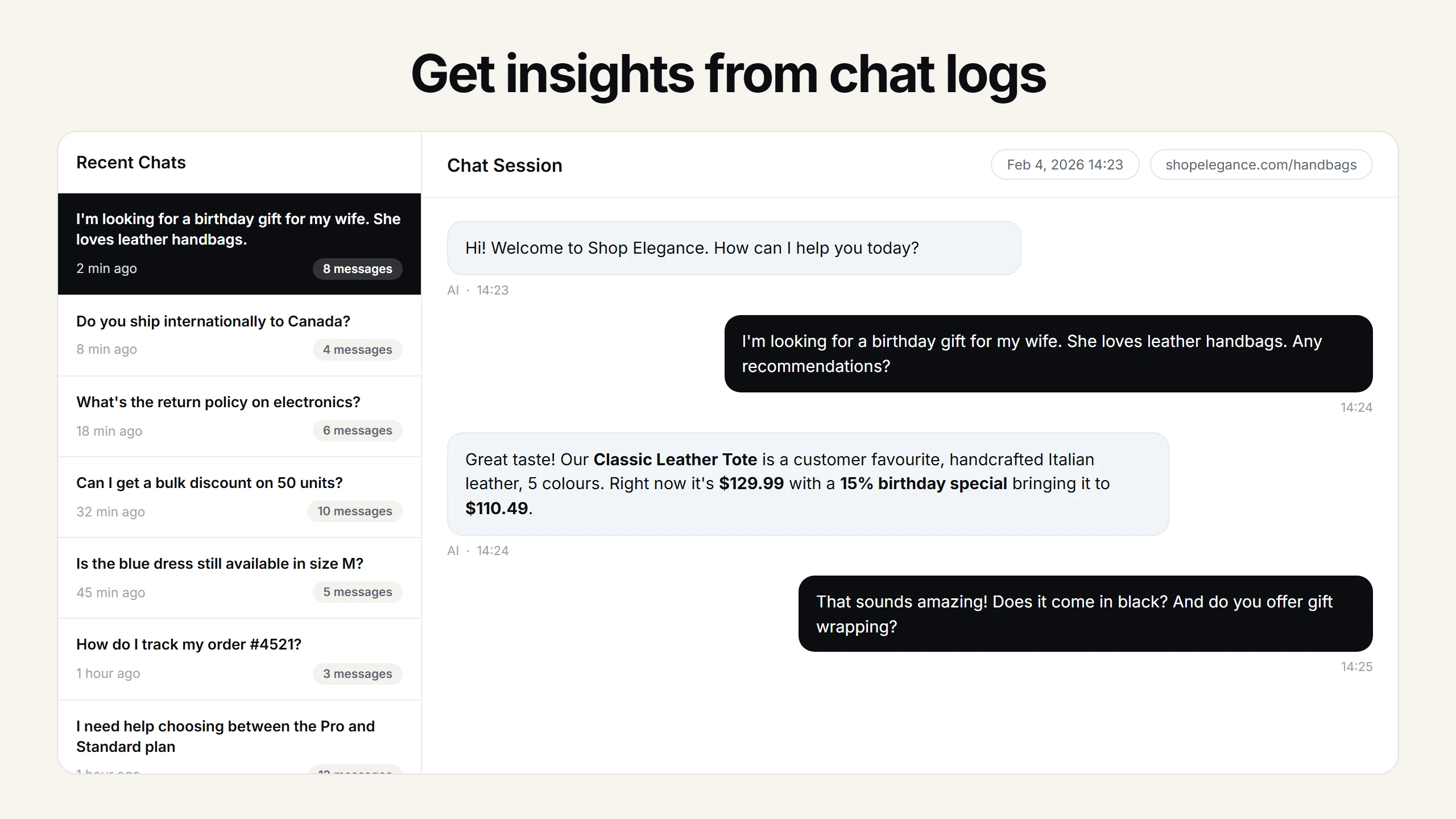
- Auto-detects the visitor's languageThe chatbot reads the first message and replies in the same language — Spanish, German, Japanese, Arabic, Thai, whichever the visitor typed in.
- Works from one-language source contentYour site can stay in English, French, or any mix. The AI bridges the translation layer on the fly; you don't keep thirty-six FAQ pages in sync.
- Consistent brand voice across marketsTone instructions and escalation rules apply in every language — formal in Japanese, warm in Spanish, concise in German — without maintaining separate prompts per locale.
Recover the sales you were losing to a single-language helpdesk
Visitors who hit an English-only chat on a French checkout page either translate in their head or close the tab. A multilingual customer support chatbot removes that friction entirely — the chat meets the buyer where they are, answers in their language, and converts the traffic you were already paying to acquire.
- Support cost that doesn't scale with new marketsOpening a new country no longer means hiring a native-speaking agent before you know the country is viable. Launch, measure demand, then staff up where the numbers justify it.
- 24/7 across every timezoneA customer in Seoul at 2 AM local gets a native-language reply in seconds, not a "we'll get back to you in 48 hours" autoresponder written in English.
- Analytics segmented by languageSee which locales generate the most questions, which topics confuse non-English visitors, and which pages need a proper human translation first.
One script tag. Every language instantly active.
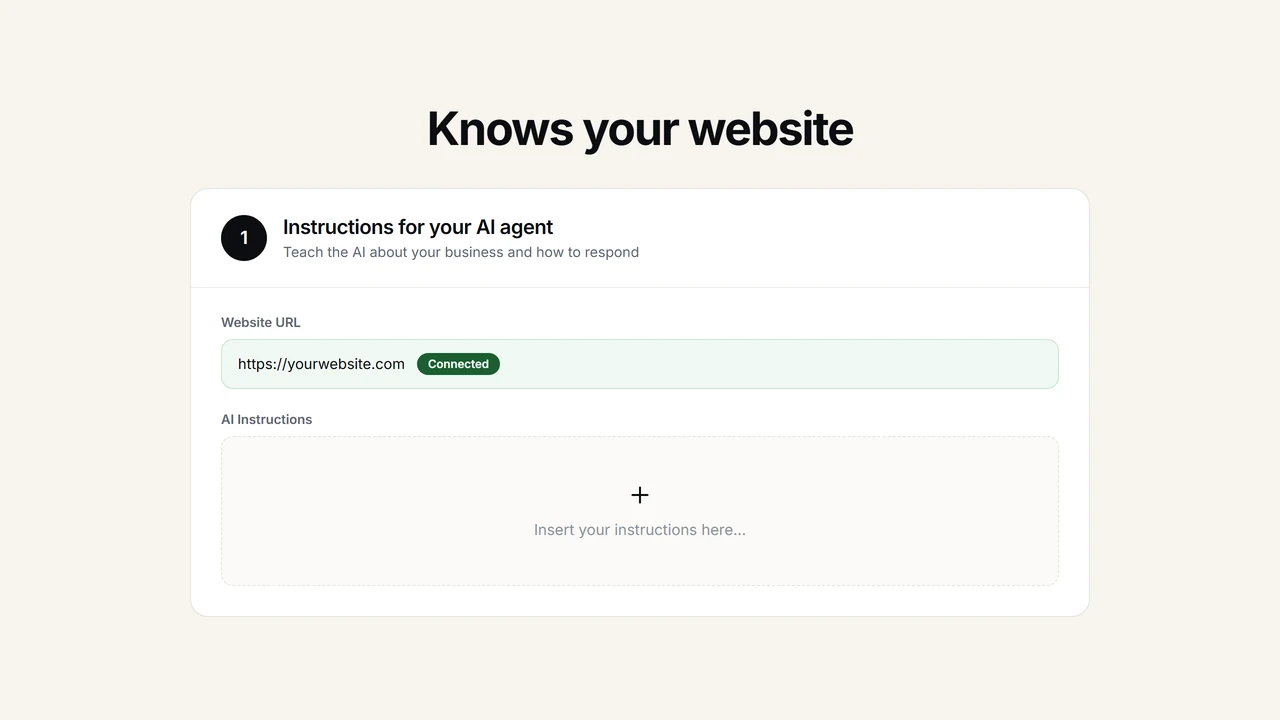
The multilingual customer support chatbot installs as a single JavaScript snippet in the page head. There's no per-language widget to configure, no locale-specific bundle to load, no translation plugin to wire up. All 36 languages ship in the same script; the AI picks the right one the moment the visitor types.
- Sign up for a free Asyntai account and copy your personal snippet.
- Paste it inside the
<head>of your site template — any CMS, any framework, any platform. - Add your site URL so the AI can crawl your help content; upload PDFs for anything not on public pages.
- Open your site in a private window, type a question in Spanish or German, and watch the reply arrive in that language.
<script src="https://asyntai.com/widget.js"
data-id="your-site-id" async>
</script>
</head>
# 36 languages. No locale files. No per-market config.
Multilingual customer support chatbot — FAQs
What global teams usually ask before switching from a single-language helpdesk.
How does the chatbot decide which language to reply in?
From the visitor's first message. The AI detects the language automatically and matches it for every subsequent reply in that conversation. If the shopper switches languages mid-thread — a common pattern for bilingual users — the chatbot follows along. You don't configure a locale; the visitor's keyboard does it for them.
Do I need to translate my FAQ pages into every language first?
No. The entire point of a multilingual customer support chatbot on Asyntai is that your source content stays in one language — usually English — and the AI handles the translation layer per conversation. You don't maintain thirty-six parallel FAQ sites. If you already have localized content, the chatbot will use it; if you don't, English source material is enough.
Which 36 languages are supported?
Arabic, Bulgarian, Chinese (Simplified), Croatian, Czech, Danish, Dutch, English, Estonian, Finnish, French, German, Greek, Hebrew, Hindi, Hungarian, Indonesian, Italian, Japanese, Korean, Latvian, Lithuanian, Malay, Norwegian, Polish, Portuguese, Romanian, Russian, Serbian, Slovak, Slovenian, Spanish, Swedish, Thai, Turkish, Ukrainian, and Vietnamese. The widget UI, greetings, placeholders, and AI responses all work in all of them.
Does the AI keep the same brand voice in every language?
Yes. Custom instructions — tone, escalation rules, phrases to avoid, the sign-off style — apply globally. If you tell the chatbot to stay concise and end replies with a specific offer, that behaviour carries into Japanese, Portuguese, Polish, and every other language without you writing a separate prompt per locale.
Can I answer order-specific questions in any language?
Yes, on Standard and Pro plans, via the User Context feature. Your site passes the logged-in customer's data — order status, tracking, account details — through a JavaScript object before the chat loads. The AI then answers "where is my order" in German, Spanish, Korean, or any of the 36 supported languages, using the same context payload. You don't pass translated user data; the AI handles it.
What happens when a conversation needs a human agent who doesn't speak that language?
The escalation lands in your Asyntai dashboard — and, if you enable email notifications, in your inbox — with the full conversation transcript. Your agent can read the thread in the original language or run it through a translator; either way, the context is captured. Leads collected from non-English conversations flow to the same place as English ones, with the language tagged.
Will a multilingual chatbot slow down my site?
The widget loads asynchronously after the main page renders, so it doesn't block interaction. The script weight is the same regardless of how many languages your visitors use — there's one bundle, not thirty-six locale files shipped separately.
Can I run the chatbot on more than one regional site?
Yes on paid plans. Free: 1 site, Starter: 2 sites, Standard: 3 sites, Pro: up to 20 sites. Each property has its own knowledge base and settings, which matters if you run regional domains (.fr, .de, .es) or separate storefronts for different markets but want the same multilingual behaviour across all of them.
Multilingual customer support chatbot, the honest version
Cross-border traffic is cheap to buy and expensive to serve. A Facebook campaign pointed at Germany or Brazil delivers the click at a reasonable cost per visit, but the moment a German-speaking shopper lands on your English support page and can't get a clear answer about shipping or returns, that acquisition budget evaporates. A multilingual customer support chatbot is the piece most international storefronts are missing in that journey — the part between "the ad worked" and "the purchase happened" where language friction quietly kills conversion you already paid to create.
The conventional fix used to be hiring agents in each region. For an established business with predictable volume, that still makes sense at some scale. For a company testing a new country, launching a product into an adjacent market, or running a lean global team, the math breaks down quickly. A single native-speaking support agent covering working hours in one language costs more than a year of the entire chat platform, and you need multiple of them to cover timezones and vacation. A multilingual customer support chatbot inverts that equation: you pay one subscription, and the tool speaks every language you need from the first day the market is live.
The mechanism matters because it shapes what the tool can actually do. Asyntai uses a large language model that already understands 36 languages natively. Your knowledge base — FAQ pages, policy content, product documentation, uploaded PDFs — stays in whatever language you wrote it in. When a visitor asks a question in Polish, the model reads your English content, reasons about the right answer, and produces a reply in Polish. There's no translation file to maintain, no locale bundle to edit, no "string not found" errors after a content update. The translation layer is the AI, not a static dictionary.
That architecture is why the content workload doesn't scale with the number of markets. A traditional localization workflow requires a matrix: every time you update your returns policy, a translator has to update it in every language, and your chatbot's coverage stays frozen until those translations land. With an AI-driven multilingual customer support chatbot, you edit the English source and every language updates at the same moment. A small ops team can maintain the content story for twelve markets as easily as one.
Language detection happens on the first message. The AI doesn't rely on the browser's Accept-Language header — that header is notoriously unreliable for bilingual users, expats, and anyone travelling — it reads the actual text the visitor typed and matches it. A French speaker using an English-configured laptop in Amsterdam will still get French replies the instant they type "bonjour, j'ai une question." The chatbot follows language switches mid-conversation too, which is common when a multilingual user asks a nuanced follow-up in their strongest language after starting in a more familiar one.
Where this tends to matter most is in specific verticals. International ecommerce is the obvious one: apparel brands shipping from a European warehouse to twenty countries need to answer shipping and duties questions in each of them. Hospitality and travel are even more acute — a hotel booking engine, a boat charter, a city tour operator is by definition serving guests in their second or third language, and every friction point is a booking at risk. SaaS companies with global reach run into it during trials, when a prospective customer from Japan or Korea evaluates documentation; the sales team only sees the trial they kept, not the three who gave up in week one. Regional education providers, online course platforms, and consulting services expanding across Europe all bump into the same wall. A multilingual customer support chatbot solves the pattern rather than the symptom.
The consistency argument is understated. Five years of a brand building a particular voice in English can be undone the first time a customer gets a reply in Italian that feels machine-translated or generically formal. Asyntai keeps custom instructions — tone, style, escalation triggers, product positioning — at the system level, so the same behaviour expresses itself across all 36 languages. If your brand voice is warm and specific in English, it stays warm and specific in Portuguese and Korean. You write the instructions once, and they apply globally, which means you don't need a separate marketing review for each locale's chatbot personality.
What this doesn't mean is that the chatbot should run unsupervised in languages your team doesn't read. The healthy pattern most teams adopt is a weekly scan of conversation logs in their main markets — a German ops lead reads German threads, a Japanese country manager reads Japanese ones — looking for places where the AI misfired or where a local phrasing quirk needs attention. Those issues get fixed by adjusting custom instructions or adding a paragraph of context, not by rewriting translations. Over time the chatbot converges on a voice that fits each market, without ever becoming thirty-six separate chatbots to maintain.
Escalation is where the human element stays intact. When a conversation reaches something the AI can't resolve — a genuinely complex refund, a custom enterprise deal, a regulated question — it captures the visitor's email and, if you configure it, their phone number. The full transcript lands in your Asyntai dashboard, and if you enable email notifications, it hits your inbox in real time. A German conversation arriving at your Munich agent's desk includes the original German thread; an English conversation with an Indonesian buyer arrives in the same pipeline. No separate helpdesk per language, no ticket routing rules to maintain.
The order-specific case deserves its own paragraph because it trips up a lot of teams evaluating multilingual chat. "Where is my order" is the single most common support question globally, and people expect an answer in their language even when the back-end data is in yours. Asyntai handles this through User Context — a feature on Standard and Pro plans. Your site passes the logged-in customer's data (order status, tracking, account info) into a JavaScript object at widget load, and the AI uses it to answer personalized questions in whichever language the visitor types. You don't translate the data. You don't maintain per-language order APIs. The AI bridges the gap on every reply.
Multi-site support matters for international rollouts because very few growing companies run a single global domain. The common pattern is a primary .com plus regional properties — a French site, a German site, maybe a separate Latin American storefront — each with slightly different catalogues, shipping, and policies. Asyntai's paid plans include multiple site slots: Starter covers two sites, Standard three, Pro up to ten. Each site gets its own independent chatbot, but all of them carry the multilingual capability by default, which means you don't configure language behaviour site by site. You configure it once per company account.
The analytics side is where a multilingual customer support chatbot becomes a product insight tool instead of just a support deflector. Conversation logs segmented by language show you which markets generate disproportionate support load, which topics confuse non-English visitors, and which help pages are failing to translate clearly even through the AI layer. If your Spanish users keep asking the same question that English users never ask, there's a gap in your source content's international friendliness — a specific assumption, reference, or structure that doesn't travel. Fixing it in the English source fixes it everywhere at once.
Pricing keeps the economics approachable for teams at any scale. The free tier includes 50 messages per month, enough to pilot a new country or run the chatbot on a single test property. The paid plans start at $39 per month for 800 messages on Starter — realistic for a mid-sized international business with steady multilingual inquiry volume. Standard and Pro raise the limits and add User Context plus more site slots. Monthly caps send email warnings before the widget pauses, so a campaign surge in a new market doesn't silently knock your multilingual customer support chatbot offline during the exact moment you need it most.
Installing it is deliberately platform-agnostic. One JavaScript snippet in the head section of your site — whether that's a WordPress theme, a Shopify Liquid template, a Wix custom code block, a Webflow head embed, a hand-built React shell, a Magento theme, or a Drupal block — and the multilingual customer support chatbot is live everywhere that page renders. There's nothing locale-specific to add per region, no translation plugin to pair it with, no per-country JS bundle to load. For teams managing more than one regional domain, the same snippet (with the right site ID) goes everywhere.
For companies serious about going international without going linguistically thin, this is the quietly transformative piece of the stack. Not a replacement for regional marketing, not a substitute for genuine cultural awareness in sales, but the layer that catches the 80% of customer questions that are universal — shipping, returns, product specs, account issues — and answers them in the visitor's own language, instantly, around the clock, at a cost that doesn't rise with the number of flags on your website footer. A multilingual customer support chatbot is how you make cross-border traffic stop leaking value on the way to conversion.