Joomla chatbot extension you upload straight through Extension Manager
Asyntai ships a Joomla chatbot as a system plugin for Joomla 4 and 5. Upload the zip, enable the plugin, click "Get started," and a 36-language AI assistant begins answering your visitors across every view — articles, categories, menus, K2, VirtueMart, whatever your templates render.
Try the Joomla chatbot against your own site
Drop your Joomla URL below and see the chatbot reply to visitor questions pulled from your published articles and menu items
A proper system plugin, not a copy-paste tracker in your template
Asyntai's Joomla integration arrives as plg_system_asyntai — a signed system plugin that hooks onAfterRender and injects the chat widget cleanly before the closing body tag. No template override, no manual header edits, no extra JS file shoved into /media/. Joomla administrators handle it exactly the way they handle every other system plugin.
- Joomla 4 and Joomla 5 supportedOne archive covers both major releases through the unified Joomla CMS plugin API — the same zip installs cleanly on fresh J4 and fresh J5 without branching versions.
- Popup connect from the plugin edit screenOpen Plugins → System - Asyntai, click "Get started," and a popup opens against asyntai.com. Sign in, and the site ID writes itself into the plugin params — no API key hunting.
- Fits multilingual Joomla buildsJoomla's core multilingual workflow (Language Manager, associated articles, language switcher) keeps working untouched; the chatbot layers on top and speaks 36 languages regardless of which language each visitor is browsing.
Reads your articles, categories, and menus, then blends in what you upload
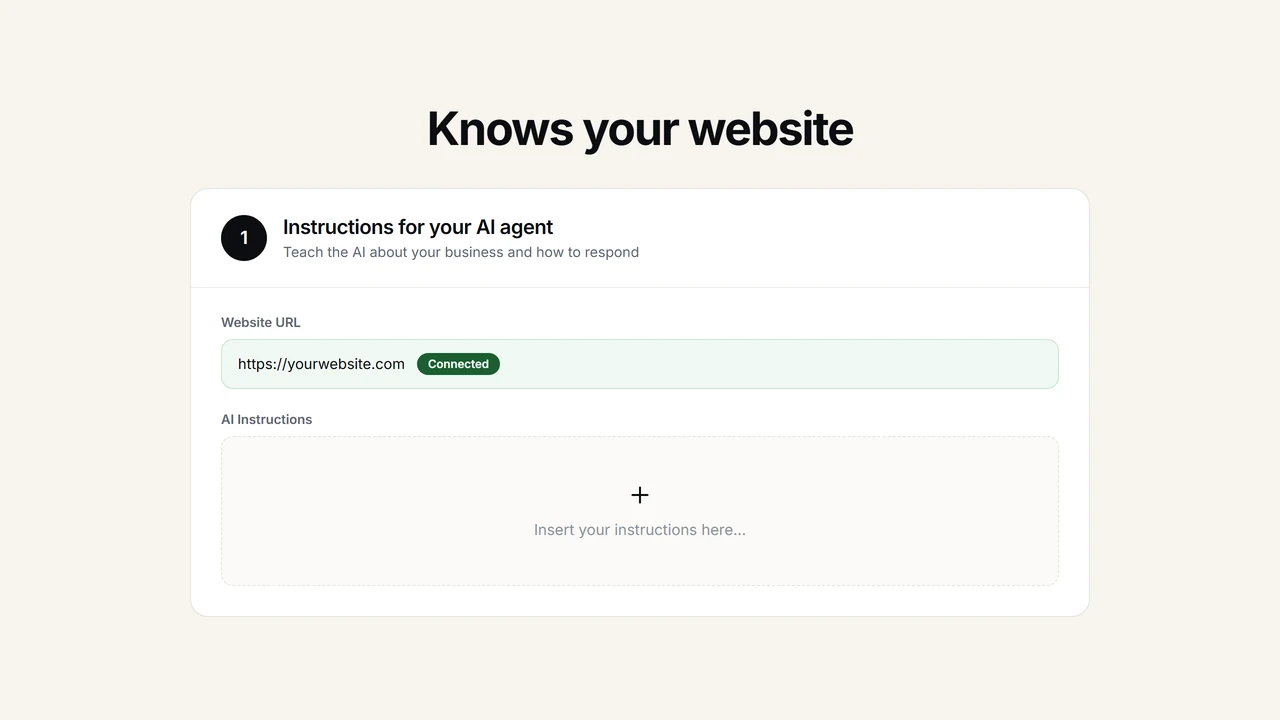
After the popup closes with a connected status, Asyntai spiders your Joomla frontend — articles, category blogs, menu items, component views, whatever your SEF URLs expose. That becomes the base answer layer. Private PDFs, internal-only procedures, partner-tier pricing and anything hidden behind ACL gets uploaded through the dashboard, and the chatbot fuses both pools on each reply.
- Crawls your public Joomla outputEvery SEF URL the crawler can reach — featured articles, blog category layouts, contact forms, com_content views, third-party component output — folds into the chatbot's reference index.
- Covers what ACL hidesDocuments restricted to Special or Super Users, internal wikis, supplier-only rate cards — drop them in as PDF uploads or pasted text on the Asyntai side so the bot can quote them without exposing the protected views.
- Behavior rules written in plain sentences"Refer enterprise license inquiries to the contact form in the Services menu." "Never quote hosting prices without asking the visitor's region first." Drop the rule into the instructions field; the Joomla chatbot honors it on every reply.
Install the Joomla chatbot in three steps
The Joomla chatbot uses the standard Extension Manager flow every Joomla admin already runs several times a month — no CLI, no FTP edits to the template, no custom ant tasks.
- Grab the Asyntai Joomla extension zip from your Asyntai dashboard (one archive covers Joomla 4 and Joomla 5).
- In Joomla administrator, go to System → Install → Extensions, drop the zip onto the upload area, then switch to System → Manage → Plugins, find "System - Asyntai - AI chatbot" and toggle it enabled.
- Open the plugin to edit, click Get started, sign in through the Asyntai popup, and the plugin writes your site ID into its params automatically.
- The Joomla chatbot is now live on every frontend view. Tweak prompts, review transcripts and capture leads at asyntai.com/dashboard.
→ plg_system_asyntai.zip (upload via Extension Manager)
→ System → Manage → Plugins → Enable
→ Edit plugin → Get started (sign-in popup)
→ site_id saved to plugin params
# Joomla chatbot rendered on every frontend view.
Joomla chatbot — FAQs
The practical questions Joomla admins, template developers, and multilingual agency teams tend to raise before installing.
Which Joomla releases does the extension support?
Joomla 4.x and Joomla 5.x are the officially tested releases. The plugin ships as a unified codepath that also degrades gracefully on Joomla 3 legacy installs, but the documented compatibility matrix is J4 and J5. If you're on a very old 2.5 build, upgrade Joomla first — the extension assumes the modern CMS plugin API.
What if I don't want to install an extension at all?
There's an alternative path for Joomla sites that keep extension counts deliberately low: paste the Asyntai JavaScript snippet from your dashboard into your template's index.php just before the closing body tag, or inject it through a custom module published to the debug position. The outcome is identical — same widget, same 36 languages, same lead capture — but without registering a new plugin in Joomla.
Does the plugin interfere with caching (System - Cache, JotCache, LiteSpeed Cache)?
No, the injection runs on onAfterRender after the page HTML is already composed, so cache plugins see and store the rendered widget script tag alongside the rest of your markup. The widget itself loads asynchronously against the Asyntai CDN, which means page caches don't need invalidating when you change chatbot settings in the dashboard.
Will it play nicely with third-party components like K2, VirtueMart, or HikaShop?
Yes. The plugin fires on every frontend render regardless of which component is active, so the chatbot appears on K2 item views, VirtueMart product pages, HikaShop category listings, EasyBlog posts, JEvents calendars and anything else your templates render through com_content or otherwise. The crawler indexes those URLs the same way it reads core articles.
How does it handle Joomla's multilingual setup?
Joomla's own multilingual plumbing (associations, language codes per article, sh404SEF or the built-in SEF) stays in charge of what pages are served. The chatbot itself carries 36 languages at the UI layer, and the AI detects each visitor's language from their opening message — so a Portuguese visitor on a page tagged "en-GB" still gets a Portuguese reply. Agencies running sites in languages Joomla doesn't have full pack coverage for still get chatbot parity.
Can I tailor answers for signed-in Joomla users?
Yes — Standard and Pro plans expose a User Context hook for exactly this. In your template or via a small custom module you expose Joomla user data — username, group, registration date, Akeeba Subscriptions tier, or anything else — as a window.Asyntai.userContext object before the widget bootstraps. The chatbot factors it into every reply, letting you address a Registered member differently from a Manager or a paying subscriber.
What happens to leads the chatbot captures?
When a conversation reaches a point the bot can't close — a detailed project brief, a complex licensing question, a site migration enquiry — it asks the visitor for an email, saves the transcript, and posts the lead into your Asyntai dashboard. Turn on email forwarding and the thread also lands in your inbox, ready to paste into Joomla's own com_contact, a CRM component, or whatever pipeline the agency runs for that client.
Can an agency run several Joomla sites from one Asyntai account?
Yes, and this is a common pattern for Joomla agencies. Pricing tiers grant 1 site on Free, 2 on Starter, 3 on Standard and up to 10 on Pro. Each Joomla property gets an isolated knowledge base, its own prompt set and its own widget theme — so a Joomla-based news portal, a Joomla-driven membership site and a Joomla-powered ecommerce store under the same roof each answer in the voice that suits them.
Joomla chatbot — how AI chat slots into a Joomla site without fighting the CMS
Joomla occupies a specific corner of the CMS market. It's been around long enough that the administrators who keep using it tend to be opinionated about how extensions ought to behave, and the communities around Joomla are unusually international — Italian agencies, German universities, Spanish-speaking membership sites, Polish publishers, Brazilian news portals. Two things follow from that. First, anything that drops onto a Joomla site has to look and feel like a native Joomla extension, not a third-party hack wedged into the template. Second, whatever you ship has to speak the visitor's language on day one, because a non-trivial slice of Joomla traffic is multilingual by design. The Asyntai Joomla chatbot was built with both constraints in mind — a proper plg_system_asyntai system plugin that installs through the standard Extension Manager, configured through the plugin edit screen every Joomla admin already knows, combined with a 36-language AI layer that handles visitor languages the Joomla site itself may not have a language pack for.
Installation is deliberately unexciting. You download the archive from the Asyntai dashboard — a single zip that covers both Joomla 4 and Joomla 5 through the unified CMSPlugin API. In the Joomla admin you open System → Install → Extensions, drop the zip onto the upload area, and the extension is registered. Next you pop over to System → Manage → Plugins, filter for "system," find "System - Asyntai - AI chatbot" and flip the enable toggle. That's the Joomla side done. No template override, no template.php edit, no manual script tag in the head of your preferred template, no separate component to install. Joomla admins who have done this dance for a hundred other extensions will do it here without reading documentation.
The connect step is where the plugin departs from the older pattern of pasting an API key into a field. Open the Asyntai plugin to edit, and the plugin's own admin injection adds a Get Started button to the edit screen. Click it, a popup window opens pointing at asyntai.com, and the normal Asyntai sign-in or sign-up flow runs. The popup closes once the account is linked, a lightweight polling script hands the site ID back to the Joomla plugin via an authenticated AJAX endpoint, and the plugin writes site_id into its params through com_ajax. From that point the site is connected. If the popup is blocked, a fallback link opens the connect window in a new tab — no admin gets stuck. Resetting the connection later is a single link inside the same plugin edit screen.
Content training starts immediately after connect. The Asyntai crawler walks the Joomla frontend — every article, every category blog view, every menu item, every third-party component route that exposes readable HTML at an SEF URL. Most Joomla sites aren't purely com_content anymore; they lean on K2 for publishing, VirtueMart or HikaShop for ecommerce, Fabrik for data-heavy pages, EasyBlog or JomSocial for community output. None of that matters to the crawler because it operates on the rendered HTML the visitor sees, so a chatbot on a Joomla/VirtueMart shop reads the same pages a human customer would read before asking about shipping, returns or product variants. That crawled layer becomes the base of the bot's answer repertoire.
Private material lives separately. Joomla's ACL restricts plenty of useful documentation to Registered, Special or Super User access groups — knowledge base articles for paying subscribers, rate cards for partner resellers, internal onboarding manuals for new editorial staff. Exposing those to a crawler would defeat the whole point of ACL, so the Asyntai approach is the inverse: upload the documents directly through the dashboard as PDFs or pasted text, and the chatbot references them without ever needing to pull them from Joomla. The bot's knowledge is therefore the union of what's public on the Joomla frontend and what's been explicitly given to it via upload — a cleaner separation than trying to hand out authenticated crawler tokens.
Multilingual Joomla deployments benefit disproportionately. Joomla's native multilingual mode — distinct language codes per article, language associations, the sitewide Language Switcher module — is arguably the most mature multilingual story of any open-source CMS. Editors build a Swedish version of an article, associate it with the English one, and Joomla routes visitors based on their language preference. The limit there is that editorial translation only covers the languages the team has the capacity to write in. A Swedish publisher running Joomla might offer editorial content in Swedish and English but still see traffic from Norwegian, Danish, Finnish and German readers. The Asyntai chatbot detects each visitor's language from their first message and replies in that language, so the conversation happens in the visitor's native tongue even when no editorial pack exists for it. The Joomla site's language switcher keeps doing what it always did; the chatbot fills the long tail.
Agency teams running multiple Joomla sites for multiple clients are a second population the platform serves well. A single Asyntai account can own several connected sites — one per client domain — with the plan tier determining how many: the Free tier hosts one site, Starter two, Standard three, Pro up to ten. Each site gets an independent training corpus and its own personality. A travel agency client's Joomla chatbot can be upbeat and playful; a law firm client's Joomla chatbot can be formal and hedged; a medical-equipment supplier's Joomla chatbot can stick strictly to spec-sheet answers. All three are configured from the same Asyntai dashboard, saving the agency from juggling three separate subscriptions while still keeping each client's voice distinct.
User Context is the mechanism that lets the chatbot go beyond anonymous visitor mode and behave like a member-aware assistant for logged-in Joomla users. On Standard and Pro plans, you expose a window.Asyntai.userContext object before the widget loads — easiest through a small custom module in the debug position that reads the current Joomla user's name, group, and any relevant subscription data (Akeeba Subscriptions tier, PayPlans level, DocMan access, whatever applies). The chatbot incorporates that context into each response: a logged-in Registered visitor gets an answer different from an anonymous one; a paying Pro member gets an answer different from a free member. No data leaves Joomla's server through a permissioned API — you choose exactly what's put into the JavaScript object, so the user's actual password hash, payment tokens, or protected fields never cross into the chat layer.
Caching is usually the next administrator concern, because Joomla sites that get real traffic live or die by their caching stack — System - Cache plugin, JotCache, LiteSpeed Cache for Joomla, CDN caching via Cloudflare. The Asyntai plugin injects its widget loader at onAfterRender, which runs after page composition, so whatever caching layer captures the output sees a complete HTML document with the script tag already in place. That cached copy serves correctly from the CDN or disk cache without needing to be busted every time you change something in the Asyntai dashboard, because the dashboard settings take effect client-side via the widget's own config fetch — the cached HTML remains valid. Administrators running aggressive Joomla caching setups don't need to add the Asyntai script to any exclusion list.
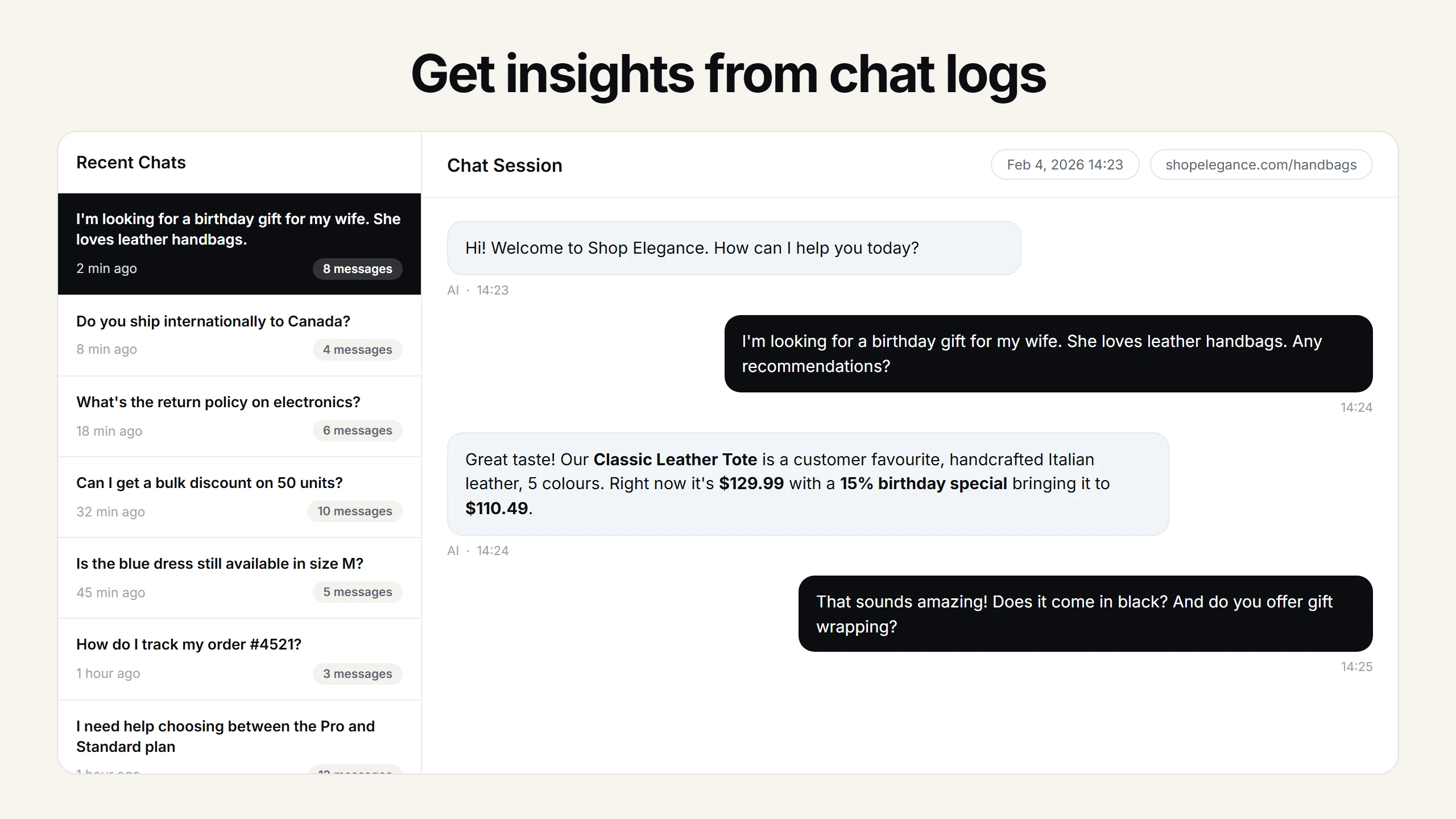
Conversation analytics give Joomla administrators something Joomla itself doesn't natively offer. Every chat thread lands in the Asyntai dashboard grouped by topic, frequency and visitor language. A Joomla-based university portal can see which admissions questions dominate; a Joomla-based Moodle marketing site can see which course enquiries recur; a Joomla-based regional news publisher can see which archive topics drive curiosity. Those patterns feed back into content strategy — new articles to write, existing articles to clarify, FAQ pages to update — and the chatbot measures its own contribution by tracking how often conversations end in a captured lead or a useful answer versus an unresolved question.
Lead capture is the commercial hinge for Joomla sites that treat their site as a business asset rather than a pure publishing outlet. Agencies selling Joomla development time, consultancies using Joomla for client portals, SaaS-style products running their marketing site on Joomla — all need reliable lead routing. When the chatbot can't resolve a thread, it asks for an email, records the entire conversation, and files the record into the Asyntai dashboard. Enabling email forwarding pushes the lead into whatever inbox your team monitors, and from there it routes into Joomla's com_contact inbox, a CRM integration, or a simple Slack channel. Because the full transcript travels with the lead, the follow-up human already knows what the visitor tried to do, which removes the dead "what were you asking about?" opening most cold lead responses suffer from.
Cost-wise, the Joomla chatbot sits at a level Joomla-scale businesses can absorb without ceremony. A free tier handles up to 50 messages so you can run the plugin on a staging build or a small club site without committing. The $39 per month Starter plan unlocks 800 messages, which comfortably covers most single-site Joomla properties — a municipality portal, an association site, a regional news platform, a small online shop. Higher plans push the message ceiling up and enable User Context for logged-in personalisation. For Joomla teams accustomed to paying annually for a template club and a component bundle, adding a chatbot subscription at that tier sits inside the existing expectations for their stack rather than becoming a new line item requiring board approval.
Rolling the Joomla chatbot out follows a tidy path. Upload the zip through the Extension Manager, enable the system plugin, connect your Asyntai account through the popup, let the crawler index your Joomla frontend, upload any ACL-protected documents you want the bot to reference, write a short set of plain-sentence instructions that capture how you want the voice to sound, open the site in an incognito window to sanity-check real visitor interactions, and ship it. Nothing in the Joomla stack changes — articles still publish through com_content, menus still route through com_menus, templates still render through your preferred framework, caching still caches, SEF still rewrites URLs. The chatbot quietly sits on top of all of that, answering the visitor questions your Joomla frontend would otherwise have to handle via contact forms, email replies, or lost traffic.