Chatbot for schools that keeps parents informed and front-office phones quiet
Asyntai puts an AI assistant on your school website that answers enrollment questions, explains tuition structures, walks families through the application process, and handles tour scheduling inquiries — in 36 languages, at midnight on a Tuesday, without adding a single task to your administrative staff.
Preview the chatbot answering from your school website
Enter your school homepage URL and the assistant will pull real questions from your published pages
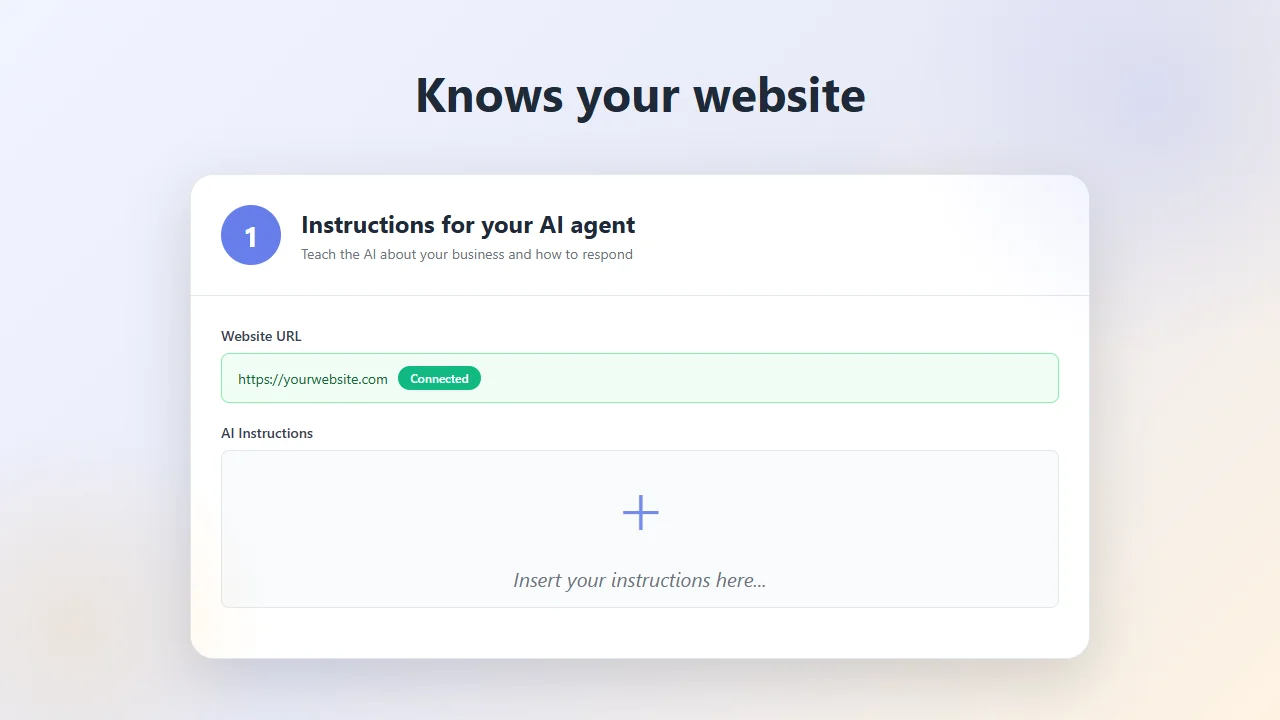
One assistant that knows your handbook, tuition schedule, and every page on the school website
Schools publish a surprising amount of information across their websites — admissions requirements, grade-level curricula, after-school program listings, lunch menus, calendar dates, uniform policies, transportation routes, faculty directories. Parents still call the front office because finding the right page takes longer than picking up the phone. Asyntai crawls your school website, ingests uploaded documents like the parent handbook and tuition breakdown PDF, and serves answers from the combined set so families get one reliable place to ask anything.
- Full-site crawl plus document uploadThe assistant pulls content from every published page on your school domain and accepts PDF uploads — parent handbooks, fee schedules, enrollment packets, curriculum guides — so nothing sits outside the chatbot's reach.
- Refresh before each school yearWhen tuition changes, a new after-school program launches, or the calendar shifts, re-crawl from the dashboard and the chatbot reflects the update before the first parent asks about it.
- Accurate sourcing, not guessworkAnswers come from your published materials. The assistant cites what your school has actually written rather than generating plausible-sounding information that might contradict your official policy.
Speak every family's language without hiring a translator for each one
International schools serve families from dozens of countries. Private and charter schools in diverse metro areas enroll households where English is the second or third language. When a parent who is more comfortable in Arabic or Mandarin or Spanish has a question about pickup procedures or the dress code, the front office can't always respond in kind. The chatbot handles 36 languages natively — detecting the parent's language from their first message and answering in it, grounded in the same English-language (or primary-language) content your school publishes.
- 36 languages, zero configuration per languageYour content stays in its original language. The assistant translates on the fly — valuable for schools with Korean, Vietnamese, Portuguese, Hindi, French, or Arabic-speaking families who need answers they can actually read.
- Available outside office hoursParents research schools after their own workday ends. A family comparing three private schools at 9 p.m. gets an immediate, informed answer from the one running Asyntai — while the other two sit behind a "contact us" form until Monday morning.
- Escalation preserves the conversationWhen a question needs a human — financial aid specifics, special education accommodations, sensitive family situations — the parent's email and the full transcript land in your dashboard and optionally your inbox, so the admissions coordinator picks up with full context instead of starting from scratch.
Add the school chatbot to your website with a single snippet
Installation is one JavaScript tag dropped into the header of your school website — WordPress, Finalsite, Squarespace, Blackbaud, a custom CMS, or whatever platform your school runs on. The same assistant appears everywhere the snippet is loaded, so a parent browsing the admissions page and another reading the after-school programs page both reach the same assistant.
- Create a free Asyntai account (100 messages included to pilot with parents and staff) and copy the snippet from the dashboard.
- Paste the snippet into the shared header template of your school website so it appears on every page.
- Point the crawler at your school domain and upload your parent handbook, tuition schedule, and enrollment documents.
- Set custom instructions for sensitive topics — financial hardship, learning differences, custody arrangements — so those conversations route to qualified staff instead of the chatbot.
<script src="https://asyntai.com/widget.js"
data-id="your-school-id" async>
</script>
</head>
# School chatbot live across admissions, calendar, and parent portal pages.
Chatbot for schools — questions from administrators, heads of school, and admissions directors
Practical concerns raised by school leadership before deploying to the school website.
Can the chatbot handle questions from both prospective and current families?
Yes, and most schools deploy it that way. The same assistant answers a prospective parent asking about the application timeline and a current parent asking about the holiday concert schedule. Because the chatbot answers from the full website plus uploaded documents, it understands both the admissions funnel and the day-to-day operational content. Schools on the Standard or Pro plan can also use User Context to pass a logged-in parent's details — grade level, campus, enrolled programs — so returning-family answers get tailored while anonymous visitor answers stay general.
We are a private school with sensitive tuition and financial aid information. How do we control what the chatbot says?
Custom instructions give you precise control over topic boundaries. You can tell the assistant to answer general tuition structure questions from your published fee schedule but decline to discuss individual family aid packages, always directing those conversations to your business office with an escalation that captures the parent's email and transcript. The chatbot only knows what you give it — if a document is not uploaded and a page is not crawled, that information does not exist in the assistant's knowledge base.
Does this work for a school group with multiple campuses?
Yes. If your campuses share one website, a single snippet covers all of them under one plan slot. If each campus has a separate domain with different content, branding, or admissions processes, each one counts as a separate site against your plan's multi-site allowance — Free includes one site, Starter two, Standard three, and Pro ten. A school group with three campuses on three separate domains fits comfortably on a Standard plan.
Our school website runs on Finalsite (or Blackbaud, or WordPress). Does this work?
The chatbot is a single JavaScript snippet, not a platform-specific plugin, so it works on any website that allows you to add code to the header. Finalsite, Blackbaud, WordPress, Squarespace, Wix, custom-built school sites — all supported. If your school runs Moodle as its LMS, there is also a dedicated AI chatbot for Moodle plugin that installs through the standard plugin manager for the learning-portal side of things.
How does the chatbot handle questions about specific grade levels or programs?
As long as the grade-level or program content is published on your site or included in uploaded documents, the assistant distinguishes between them. A parent asking about the middle school math curriculum gets an answer from the middle school pages, not the high school ones. A question about the IB Diploma programme pulls from the IB section, not the general college-prep track. The assistant treats each piece of content as contextually distinct rather than blending everything into a generic response.
What about child safety and data privacy?
The chatbot interacts with parents and prospective families on your public website — no student records, no personally identifiable child data flows through the widget unless you explicitly configure User Context to pass it (and for K-12, most schools choose not to). Conversations are encrypted in transit and at rest. Treat the widget the same as any third-party tool on your public site: it sees what the visitor types and what your published content says, nothing more.
Can we see what parents are asking?
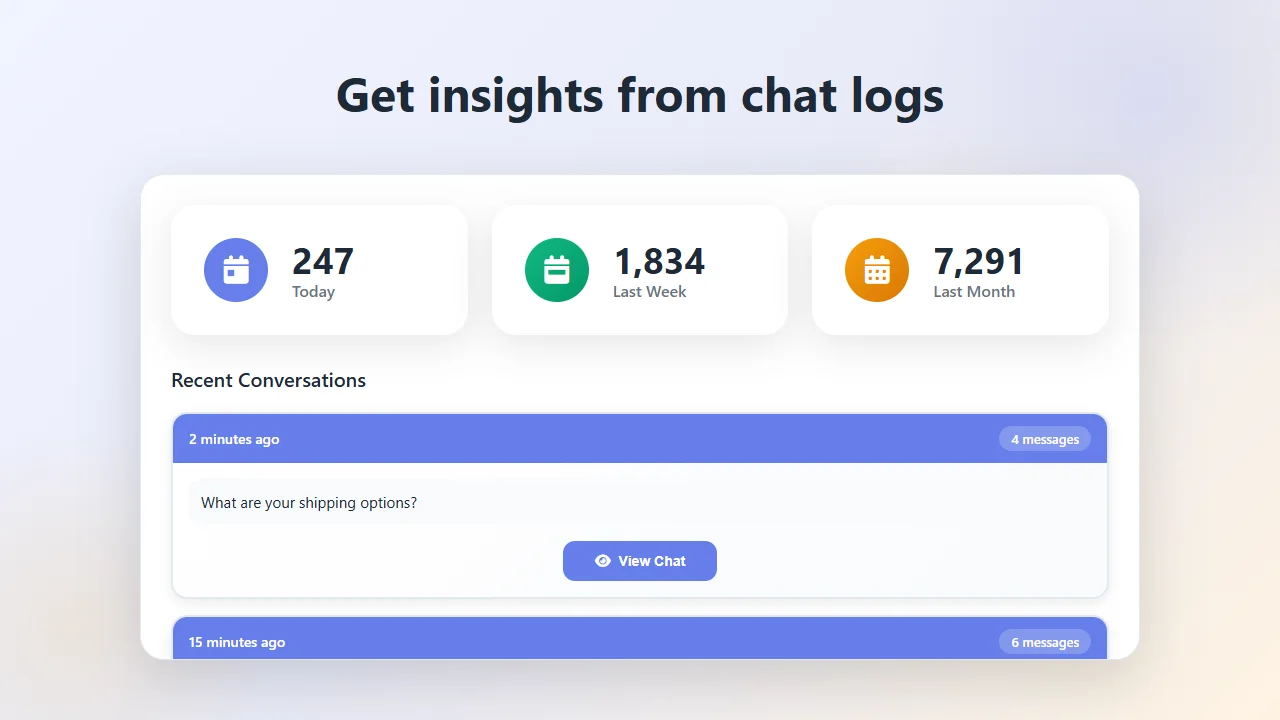
Every conversation transcript is available in the Asyntai dashboard. Over time, patterns emerge — a cluster of questions about bus routes your website does not explain well, confusion about the re-enrollment deadline, repeated inquiries about a new after-school program that lacks a dedicated page. These transcripts become an actionable content audit: fix the gaps parents keep hitting and the chatbot handles even more of the volume going forward.
What does pricing look like for a school?
The free plan includes 100 messages — enough for a two-week pilot during an admissions cycle. Paid plans start at $39 per month for 2,500 messages. Most single-campus schools land on a plan that matches their traffic volume, not their enrollment size or staff count. A small Montessori school with modest web traffic and a large international school with a high-traffic admissions funnel use the same plan tiers — the difference is how many conversations the chatbot handles per month.
Chatbot for schools — what it changes and why schools are adopting it
Every school office knows the rhythm. September brings a flood of questions about bus routes, lunch accounts, and supply lists. October shifts to parent-teacher conference scheduling. November through February is admissions season — applications, tours, tuition inquiries, financial aid deadlines, acceptance letters. March brings re-enrollment. April and May produce questions about summer programs, final exams, graduation ceremonies. The topics rotate on a calendar, but the mechanism stays the same: a parent has a question, the answer exists somewhere on the school website or in a PDF, and the parent calls the front office instead of finding it because the website is not organized the way their question is organized. A chatbot for schools exists to close that gap — taking the content the school has already published and making it searchable by conversation rather than by menu navigation.
Admissions is the surface where the payoff arrives fastest. During peak season, admissions offices at private schools, international schools, and competitive charter schools field dozens of repetitive inquiries each day — application deadlines, required documents, tuition ranges, whether there is a sibling discount, whether the school offers transportation, what the class sizes look like, when tours are available. Each of these questions has an official answer that lives on the website or in a brochure PDF. The admissions coordinator answering the same question for the fourteenth time that week is doing low-leverage work that prevents them from doing the high-leverage work: evaluating applications, meeting with families, building relationships with feeder schools. Dropping a chatbot on the admissions pages hands the repetitive volume to automation and frees the human team for the interactions that actually require judgment and warmth.
Tour scheduling deserves its own mention because it occupies an outsized share of admissions office time at K-12 schools. Unlike universities where a prospective student might apply sight-unseen, parents choosing a school for their child almost always want to walk the hallways, meet a teacher, watch a class in action. The volume of tour-related questions — when are tours available, can I bring my child, is there parking, how long does it take, what should I expect — is substantial during admissions windows. A chatbot that answers these questions instantly and points the family to the booking link captures tour interest at the moment of highest intent rather than after a 48-hour email turnaround, during which the family may have already booked a tour at a competitor school down the road.
The multilingual dimension matters more in K-12 than most administrators initially expect. International schools, by definition, serve families from many countries — a chatbot that answers in Korean for one parent and in Portuguese for the next is doing work that the school's bilingual front-desk staff literally cannot replicate at scale. But it is not only international schools that benefit. Urban private schools, charter schools in diverse neighborhoods, and boarding schools drawing from global applicant pools all enroll families whose first language is not English. A parent who speaks fluent Spanish but less-confident English will get a clearer answer about pickup procedures from a chatbot responding in Spanish than from an English-only FAQ page. With 36 languages supported, the chatbot becomes an accessibility layer that the school does not have to staff or translate for manually.
Boarding schools represent a particular use case where the chatbot justifies itself through timezone coverage alone. Families considering a boarding school in New England from Seoul, Dubai, or Mexico City are browsing the school website during their local evenings — which correspond to the middle of the night at the school. No one is answering emails at 3 a.m. Eastern. A chatbot that answers from the boarding life section of the website, the residential handbook, the weekend activities schedule, and the health services policies gives that overseas family an immediate, substantive conversation instead of a "we'll get back to you" autoresponder. For boarding schools competing globally for enrollment, the speed of the first response is often the difference between a family that applies and one that moves on to a school that answered faster.
After-school programs and extracurriculars generate a category of parent questions that is surprisingly high-volume and surprisingly hard to find on most school websites. Which enrichment programs run on Tuesdays? Is there a fee for the robotics club? Does the school offer extended care until 6 p.m.? Can my child switch from soccer to art mid-semester? These answers often live in a PDF attached to a buried page, or in an email sent at the start of the year that no one can locate in November. Adding after-school program documents and the activities calendar to the chatbot's knowledge base means a parent gets the answer conversationally instead of digging through the website's third-level navigation or calling the office during their own lunch break.
Curriculum questions from prospective families are a subtler but important category. Parents choosing between schools — especially at the elementary and middle school levels — care deeply about educational approach. Does the school follow a Montessori philosophy? Is the math curriculum Singapore Math or Everyday Math? When does foreign language instruction begin? How is reading taught in kindergarten? Are there advanced or gifted tracks? Schools publish this information, but often in language that assumes familiarity with educational terminology. A chatbot that has ingested the curriculum pages and program descriptions can bridge that gap, translating official content into a conversational answer that meets the parent where they are rather than requiring them to decode an academic framework document.
The lead capture dimension is worth calling out for admissions teams specifically. When a prospective parent interacts with the chatbot and provides their email — either voluntarily or because the chatbot escalates a question it cannot fully answer — that contact lands in the Asyntai dashboard with the full conversation transcript, and optionally triggers an email notification to the admissions director. This is not a vague "website visitor" analytics event. It is a record of exactly what the family asked, which topics they cared about, and where the conversation led. Admissions teams that use these transcripts to personalize their follow-up outreach — referencing the specific program the parent asked about, addressing the exact concern they raised — report meaningfully warmer conversations when they do connect by phone or in person. For schools running open-enrollment campaigns or admissions events, the dashboard also reveals which questions prospective families ask most, giving the admissions team a ready-made script for the next open house presentation.
Operational questions from current families represent the long-tail volume that keeps the front office busy year-round. What time does early drop-off start? Is there school on the professional development day? Where do I find the updated lunch menu? How do I update my emergency contact information? My child lost a jacket — is there a lost and found? These are not complex questions. They have clear, factual answers. But each one that hits the front desk by phone or email takes a staff member away from other work for a few minutes, and multiplied across hundreds of families and dozens of questions per week, the aggregate time cost is real. A chatbot that absorbs these routine inquiries lets office staff focus on the work that actually requires a human being — managing student records, coordinating with teachers, handling sensitive family situations.
Schools that run their learning management system on Moodle have an additional deployment path: the Asyntai Moodle plugin installs through the standard plugin directory and places the chatbot inside the LMS environment. This is useful for schools where parents and students interact with Moodle for assignments, grades, and communications — the assistant answering from school content becomes accessible inside the platform families already use daily, rather than only on the public-facing website. A parent checking their child's assignments in Moodle can ask the chatbot about the upcoming field trip or the snow-day policy without switching to a different tab.
Keeping the chatbot current is an operational reality that schools cannot ignore, because so much of the information changes on an annual or seasonal basis. Tuition increases each year. The calendar shifts. New faculty join. Programs launch or retire. Enrollment deadlines roll forward. A chatbot quoting last year's tuition figure or pointing to a discontinued program actively misleads every parent who asks, and the error compounds at scale. The refresh process is intentionally lightweight — re-crawl the website from the dashboard, upload the revised handbook and fee schedule, and the assistant picks up the current information within minutes. Schools that schedule a content refresh at the start of each semester and an ad-hoc update whenever a major policy changes stay accurate with minimal effort.
The decision to deploy usually starts with a pilot. An admissions director pastes the snippet on the admissions landing page during open enrollment season, watches the transcripts for a few weeks, and sees what parents are actually asking. The patterns that emerge — which questions recur most, which ones the chatbot handles well, which ones need human escalation — inform both the chatbot's custom instructions and the school's own website content strategy. From there, expansion to the full school website is a settings change, not a new project. One assistant, grounded in the school's own published materials, fluent in 36 languages, available at every hour of every day, absorbs a measurable share of the repetitive inbound volume that school offices have always handled manually — and gives parents a faster, more reliable answer in the process.