Chatbot for booking that catches every appointment inquiry
Asyntai offers a chatbot for booking that answers availability, pricing, and policy questions 24/7 — then captures every booking intent with full context and routes it straight to your inbox, ready to confirm.
Try the booking chatbot on your site
Paste your booking site URL and see how the chatbot would handle real appointment inquiries
Answers the pre-booking questions that decide whether a visitor books or leaves
Most visitors who land on a booking page have a question before they commit — about availability, duration, price, policy, or whether the service fits their specific situation. A chatbot for booking has to answer those questions accurately before the visitor closes the tab and tries a competitor.
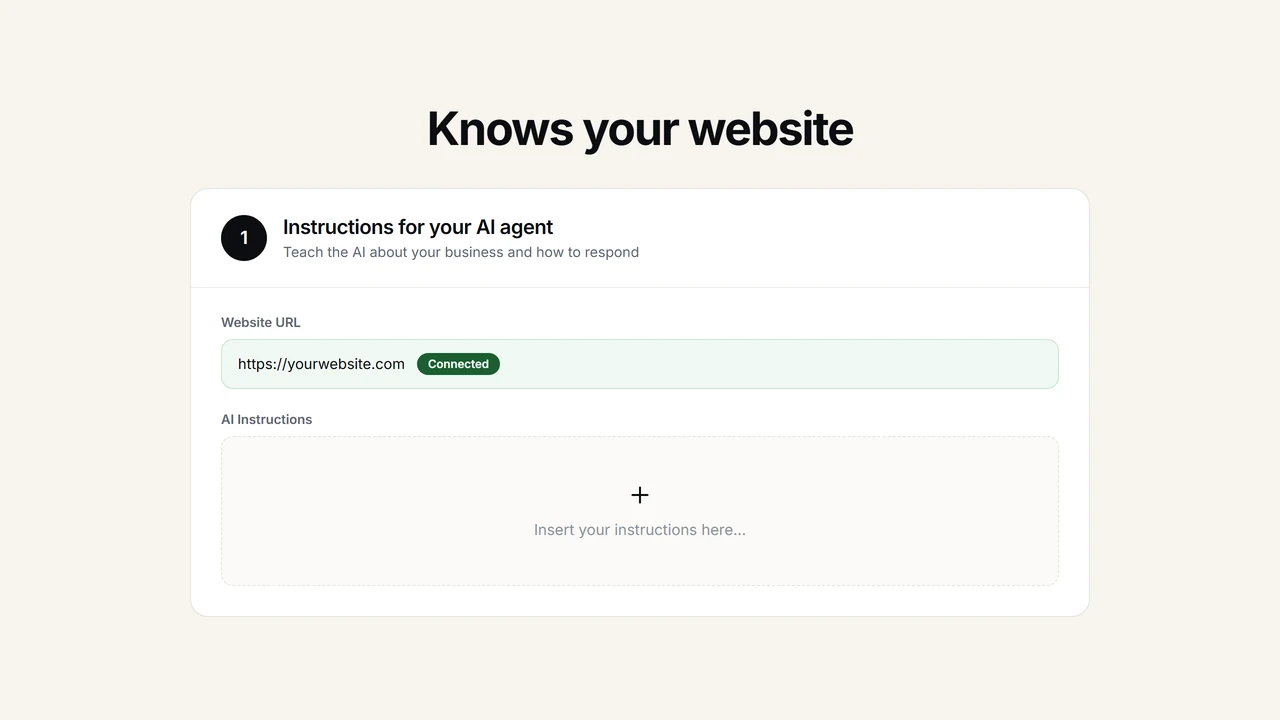
- Auto-reads your services, hours, and policiesEvery service page, pricing breakdown, opening hours, cancellation policy, intake information — absorbed into the chatbot's knowledge from your site URL.
- Upload internal booking rulesPreferred-day availability, VIP-only slots, minimum notice periods, group booking procedures — added as PDFs or pasted text so the chatbot handles edge cases correctly.
- Qualifies before it books"Always ask whether it's a first-time or returning client." "Check whether it's a couples appointment." "Flag bookings under 24 hours notice to the manager." You write the qualification rules; the chatbot applies them.
Every appointment inquiry arrives with full context, ready to confirm
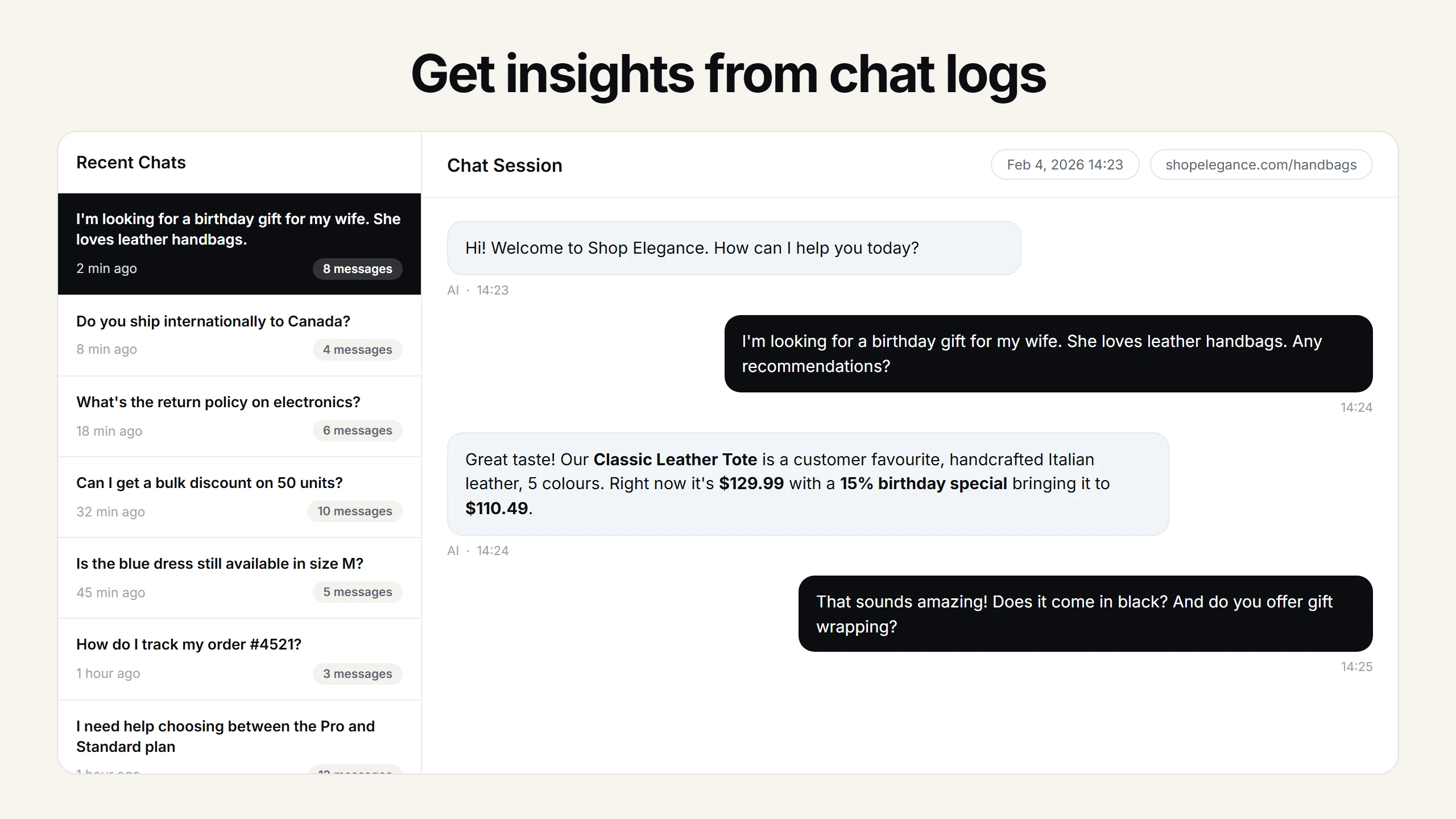
The chatbot for booking doesn't write directly into your calendar — and that's intentional. It captures the booking intent with every detail you need, and lets your existing booking flow handle the actual confirmation. Nothing goes into your calendar without your team reviewing it.
- Captures the full booking detailPreferred date and time, service requested, name, email, phone, special notes, source of the inquiry — everything your team needs to confirm the booking.
- Real-time inbox notificationsTurn on email alerts and every new booking request lands in your inbox the moment the visitor hits send, transcript and contact included.
- Works with any booking systemCalendly, Cal.com, Acuity, SimplyBook.me, Wix Bookings, OpenTable, Resy, Setmore, or a spreadsheet — the chatbot captures intent, your existing booking system handles the calendar.
Live on your booking site in minutes
Setting up a chatbot for booking shouldn't take longer than setting up the booking page itself. Asyntai installs as a single JavaScript snippet on your website — WordPress, Squarespace, Wix, a custom page, anywhere you already publish your booking link.
- Sign up for a free Asyntai account and copy your personal snippet.
- Paste it into the
<head>of your website — via your CMS header settings or the template directly. - Point Asyntai at your booking site URL and upload any internal scheduling rules the chatbot should know.
- Write a few qualification rules in plain English, test a few inquiries, and go live.
<script src="https://asyntai.com/widget.js"
data-id="your-site-id" async>
</script>
</head>
# Catching booking inquiries on every page.
Chatbot for booking — FAQs
What service providers, clinics, studios, and hospitality businesses typically check before installing.
Does the chatbot book appointments directly into my calendar?
No — and that's deliberate. The chatbot captures booking intent with all the details you need (preferred time, service, contact info, special requests) and routes it to your inbox and dashboard. Your team confirms through your existing booking system — Calendly, Cal.com, Acuity, Wix Bookings, whatever you use. This keeps final scheduling control with you and avoids double-booking risks from an AI writing directly into shared calendars.
Which booking systems does this work with?
All of them. Because the chatbot captures intent and routes it via email, it works alongside Calendly, Cal.com, Acuity Scheduling, SimplyBook.me, Wix Bookings, OpenTable, Resy, Setmore, Vagaro, Mindbody, SalonBiz, and any other booking platform. You don't need an integration between the chatbot and the booking tool — the handoff happens through the ticket or inquiry you already review.
What happens when a visitor wants to book outside business hours?
The chatbot captures the full booking inquiry — service, preferred time, contact details — and queues it in your inbox. You confirm when you're back on. This is usually the biggest unlock for service businesses: the 2 AM inquiry that would have become a lost lead is now a contextualized booking request waiting for you in the morning.
Can the chatbot answer questions about availability?
It answers based on your published availability — opening hours, typical scheduling windows, seasonal closures, booking policies. For real-time calendar availability (which specific slots are open this Thursday), the chatbot points visitors to your live booking page or flags the inquiry for your team to respond with open slots. Most service businesses find this split — chatbot handles general availability, booking tool handles specific slots — works cleanly.
Can we recognize returning clients?
Yes, via User Context on Standard and Pro plans. Your site can pass logged-in member data — name, past services, loyalty tier, preferences — into a JavaScript object before the chatbot loads. The chatbot uses that context to greet returning clients by name and reference their history: "Welcome back, Sofia — shall I book the same 60-minute signature facial as last time?"
Does it support multiple languages for international bookings?
Yes. 36 languages are supported in the widget UI, and the AI detects each visitor's language from their first message. A French visitor asks in French and gets a French reply; a Japanese tourist browsing your spa gets Japanese; a German client asks about availability in German. All handled from one installation, without a translation plugin.
How does this compare to just using a booking form?
A booking form asks every visitor to commit before they've had their questions answered — which loses visitors who aren't sure yet. The chatbot for booking handles the pre-commitment questions first (about service fit, pricing, policies, availability) and only collects booking details once the visitor is ready. That shift typically converts more inquiries from pure page visits than a form-only flow.
Can I run it across multiple locations or branches?
Yes on paid plans. Free: 1 site, Starter: 2, Standard: 3, Pro: up to 10. Each location or brand gets its own separately trained booking chatbot with its own services, policies, and escalation rules — useful for multi-location practices, franchises, and portfolio operators.
Chatbot for booking — where it fits in the booking funnel
Almost every business that takes bookings leaks them in the gap between "visitor interested" and "visitor books." The interest is there — the person found your site, read the services page, looked at prices, and started considering it seriously. The availability is there too — your calendar has open slots this week and next. And yet a meaningful share of those visitors close the tab without booking, because something between their interest and the confirmation button stopped them. Usually it's a question that didn't have an obvious answer on the site: whether the service fits their specific situation, whether they should pick the 60-minute or the 90-minute option, whether the cancellation policy is flexible, whether they can bring someone, whether parking is an issue, whether the time they'd prefer is actually available. A chatbot for booking exists to catch those visitors at the moment the question forms and answer it before the tab closes.
The specific category of business that benefits most from a booking chatbot is wider than it first looks. Any business that takes reservations or appointments is in this category: salons, spas, hair studios, nail bars, massage therapists, medical and dental practices, veterinary clinics, fitness and yoga studios, physical therapy, chiropractors, tattoo artists, photography studios, videographers, lawyers, accountants, financial advisors, consultants, coaches, tutors, driving schools, restaurants, hotels, vacation rentals, tour operators, events and venue rentals, coworking spaces, car rentals, boat rentals, cleaning services, home services. What they share is that the commercial relationship starts with a booking request, and the booking conversion rate depends heavily on whether pre-booking questions get answered at the right moment.
Giving the chatbot your services and booking logic is the setup step that produces the biggest quality difference. You provide Asyntai with your site URL, and the AI crawls your services pages, pricing breakdowns, opening hours, team bios, policy pages, and anything else published publicly. That gets the chatbot answering most common pre-booking questions immediately — how long does each service take, how much does it cost, what's the cancellation policy, what's included in which package. For rules that don't live on the public site — preferred-day availability for certain services, minimum notice periods, which team member handles which specialization, VIP-only time slots, group booking procedures — you upload documents or paste text so the chatbot handles edge cases correctly. Custom instructions in plain English add the qualification layer: "always ask if the client is a first-timer before recommending a service," "flag any appointment request under 24 hours notice to the manager on duty," "offer the intro package to new clients when they ask about pricing for the first time."
The deliberate architectural choice worth explaining is that the chatbot for booking doesn't write directly into your calendar. Most booking calendar tools — Calendly, Cal.com, Acuity, SimplyBook.me, Wix Bookings, OpenTable, Resy, Vagaro, Mindbody, SalonBiz — have their own availability logic, double-booking prevention, resource allocation rules, and confirmation flows. Having an AI bypass those rules to write bookings directly is how you end up with real operational problems: two clients booked to the same slot, a service booked without the right room allocated, a group booking treated as an individual. Asyntai captures the booking intent instead — preferred date and time, service requested, contact details, special notes, anything else the visitor mentioned — and sends it to your inbox. Your team confirms through the booking system you already use, which keeps the integrity of your actual calendar intact.
In practice this means the booking chatbot fills a specific role in the funnel: it's the friendly first point of contact that qualifies and captures the booking request, before the booking system takes over for confirmation. When a visitor asks "do you have availability for a 60-minute massage on Saturday," the chatbot answers based on your published hours, confirms that Saturdays are typically open, asks clarifying questions if needed (preferred time, practitioner preference, first-timer or returning), captures the visitor's name, email, and phone, and sends the full inquiry to your inbox. Your team sees the inquiry, opens your actual booking software, checks the live availability for that specific slot, and confirms with the visitor directly. The friction that killed the booking in the traditional flow — "fill in this form and we'll get back to you within 3 business days" — is gone, because the chatbot caught the interest in real time.
The 24-hour factor matters for booking businesses more than for most other service categories. Booking decisions often happen outside business hours: someone browsing salon services at 10 PM, someone looking into a dentist after a weekend toothache, someone planning a honeymoon hotel at midnight, someone sizing up a coach while the kids sleep. In the traditional flow, these visitors fill in a contact form and wait 12-36 hours for a reply — by which time most of them have already booked somewhere else. A chatbot for booking that answers immediately and captures the intent turns that 10 PM interest into a contextualized booking request in your inbox at 10:04 PM, ready to confirm when your team is back on.
Multilingual bookings become meaningful for any business with international clientele or tourists. A Parisian hotel's booking chatbot handles inquiries in French, English, Chinese, Japanese, and Arabic on the same day. A spa in Lisbon serves Portuguese locals, Spanish weekenders, and British tourists. A yoga studio in Berlin books classes for German regulars and English-speaking expats. The Asyntai widget supports 36 languages, and the AI detects each visitor's language from their first message, so non-native visitors get booking answers in their own language without any translation plugin, extra staff hiring, or duplicated configuration. For hospitality and tourism-adjacent businesses, this alone often justifies the AI booking layer.
Recognizing returning clients is where the User Context feature produces noticeable magic. On Standard and Pro plans, your website can pass logged-in member data — name, past appointments, loyalty tier, service preferences, preferred practitioner — into a JavaScript object before the widget loads. The chatbot uses that context for personalized booking conversations. "Welcome back, Sofia — shall I book the same 60-minute signature facial as last time?" "Hi Mark — your last reservation was in October. Ready to book the private tasting room again?" This kind of recognition is what separates a property or business that feels cared for from one that feels transactional, and the mechanism is pushed from your own site (not pulled from your backend), so you control exactly what the chatbot sees.
Analytics become a running audit of what's missing from your booking page. Every booking inquiry the chatbot handles is logged with the questions asked, the service requested, the path that led to the booking intent, and any hesitation points in the conversation. If a lot of inquiries stall around cancellation policy, your cancellation page isn't clear enough. If international visitors keep asking about language options during the actual service, your service page needs language-capability notes. If most first-time clients hesitate on pricing, your pricing page needs better anchoring. The conversation log surfaces these patterns in the Asyntai dashboard, grouped by frequency and topic — so the booking chatbot isn't just catching bookings, it's pointing at the pages you should rewrite so fewer bookings get lost in the first place.
Pricing is structured to be viable at any scale of booking business. The free tier includes 100 conversations a month, which is realistic for a small single-location practice or a solo provider. Paid plans start at $39 per month for 2,500 conversations — enough for most mid-sized booking businesses with healthy traffic. Higher tiers exist for busy multi-location operations and high-traffic hospitality venues. Site limits scale with the plan: free 1, Starter 2, Standard 3, Pro up to 10, which matters for franchise operators, multi-location practices, and hospitality groups running chatbots across several properties. Email warnings before you hit your message cap give you runway to upgrade before a peak booking period is interrupted.
The businesses that see the most obvious return on adding a chatbot for booking are the ones where booking conversion depends on questions being answered at the moment of interest. Beauty and wellness businesses — salons, spas, aestheticians — win on service clarification and price confirmation. Medical and dental practices win on intake questions, insurance clarification, and new-patient procedures. Veterinary clinics win on emergency triage and service-fit questions. Hospitality venues win on room availability, amenities, and reservation modifications. Restaurants win on reservation availability and dietary accommodation questions. Tour operators and experience businesses win on logistics questions and participant qualification. Professional services — lawyers, accountants, consultants — win on initial scoping and service qualification before booking a paid intake call. Across all of these, the pattern holds: pre-booking questions that would have killed the booking in a form-based flow get answered in a chat, and the booking continues.
Rolling out a chatbot for booking doesn't require changing how your existing booking system works. Paste the Asyntai snippet into your website's header. Point the AI at your services URL so it learns what you offer, your hours, and your policies. Upload the internal documents that describe how you actually handle bookings — including the edge cases. Write a handful of qualification rules in plain English. Test a few realistic inquiries. Go live. Your existing booking tool keeps handling confirmations. The chatbot just makes sure every interested visitor reaches the confirmation step instead of closing the tab with their question unanswered.