An AI chatbot for restaurants that seats guests, answers dietary questions, and never takes a break
Asyntai gives your restaurant an AI chatbot that handles reservation requests, walks diners through allergen details, explains the menu in their own language, and captures catering leads — all while your kitchen stays focused on the food.
Preview the restaurant chatbot on your own site
Drop in your restaurant URL and watch the AI field the questions your host stand normally juggles
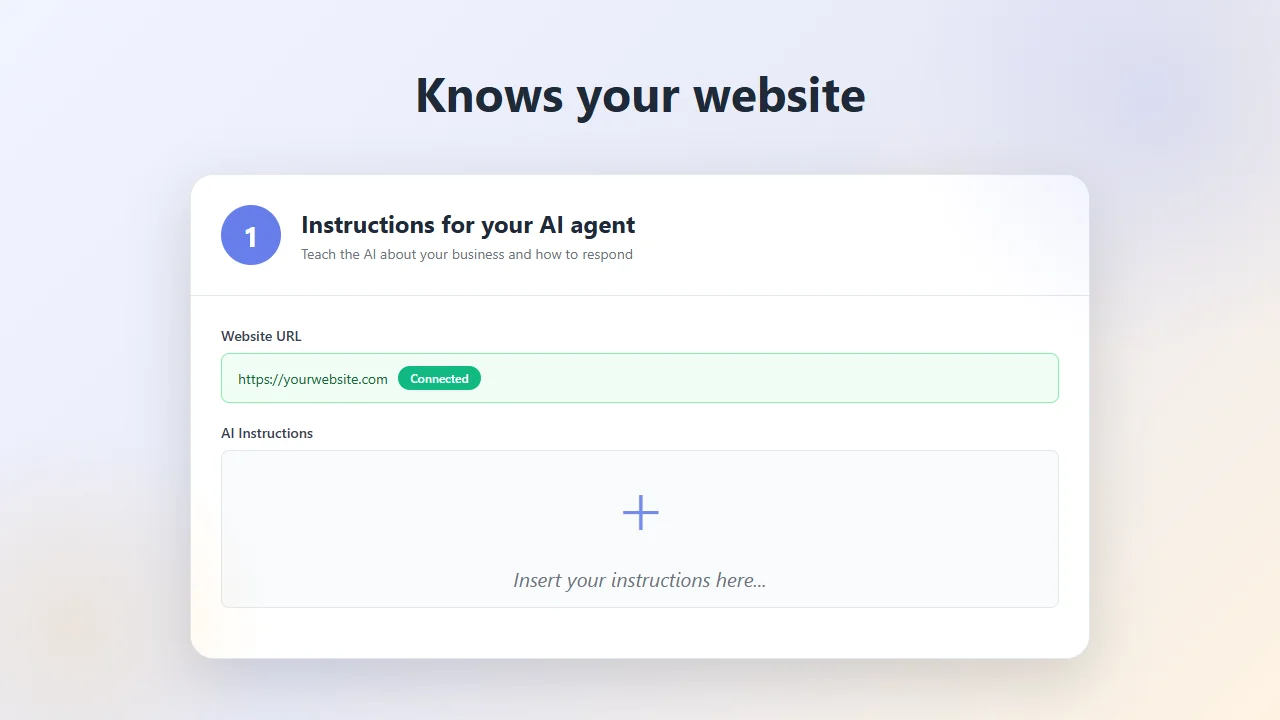
Knows your menu, your hours, your allergen matrix, and your house rules — because it learned them from your pages
Generic bots guess. An AI chatbot for restaurants that reads your actual website pulls answers from the menu PDF you uploaded, the hours listed on your contact page, and the dietary notes buried three clicks deep. Guests get accurate replies grounded in what your kitchen actually serves.
- Menu items, prices, and descriptions ingested automaticallyPoint the chatbot at your site and it absorbs every dish listing, seasonal special, prix fixe option, and kids menu item — then references them verbatim when a guest asks.
- Allergen and dietary data from uploaded documentsUpload your allergen matrix, ingredient spec sheets, or dietary accommodation guide and the AI cross-references them when someone asks whether a dish contains shellfish, dairy, or tree nuts.
- House policies explained without staff interventionCorkage fees, dress code, parking validation, group minimum spend, no-show charges, holiday surcharges — written once in your source material and repeated consistently to every guest who asks.
Every reservation request arrives with party size, preferred time, and special notes attached
The AI chatbot for restaurants collects the details your host needs to confirm a table — date, time, party size, occasion, dietary flags, seating preference — then routes the complete request to your inbox and dashboard. Your reservation system stays in control; the chatbot just makes sure nobody hangs up.
- Structured reservation intake via natural conversationInstead of a rigid form, the chatbot asks follow-up questions conversationally: preferred date, number of guests, indoor or patio, any allergies the kitchen should know about — then packages it all into a single notification.
- Instant email alerts for the front-of-house teamEnable notifications and every reservation request lands in the inbox your manager already monitors, with the full transcript and contact details included.
- Catering and private dining inquiries routed separatelyWrite a rule — "when the guest mentions catering, a private event, or a buyout, collect budget range and guest count and flag it as an event inquiry." The chatbot follows that protocol every time.
Add the restaurant chatbot to your website in one step
Whether your restaurant runs on WordPress, Squarespace, a custom site, or a hospitality platform, installation is a single JavaScript snippet pasted into the page header. No plugin dependencies, no platform lock-in, and the chatbot loads without slowing your site.
- Create a free Asyntai account and copy the snippet from the dashboard — it takes under a minute.
- Paste the snippet into the
<head>of your restaurant website, either through your CMS header field or directly in the template. - Enter your restaurant URL so the chatbot crawls your menu, hours, and policy pages; upload the allergen matrix and any private documents separately.
- Add plain-English rules for reservation handling, dietary disclaimers, and catering qualification — test a handful of guest questions, then publish.
<script src="https://asyntai.com/widget.js"
data-id="your-restaurant-id" async>
</script>
</head>
# Guests start asking about the menu on next page load.
AI chatbot for restaurants — questions from operators
The concerns restaurant owners, GMs, and hospitality groups raise before putting AI in front of guests.
Will the chatbot give incorrect allergen information and create a liability?
The AI answers strictly from documents you provide — your allergen matrix, ingredient lists, and dietary notes. It will not speculate beyond that material. If a guest asks about an allergen the chatbot has no data on, it responds with a disclaimer directing them to speak with the kitchen directly. You control the source material, which means the chatbot's accuracy ceiling matches the accuracy of what you upload.
Does the chatbot actually book tables in our reservation system?
No. It captures the reservation request — date, time, party size, occasion, dietary notes, contact details — and delivers the complete package to your dashboard plus your email inbox. Your host confirms through OpenTable, Resy, Yelp Reservations, SevenRooms, or whatever system you already use. This keeps double-booking risk at zero and leaves final seating decisions with your floor team.
Can the chatbot handle questions about seasonal or rotating menus?
Yes, as long as your source material stays current. When the menu changes, update the URL the chatbot reads from or re-upload the new menu document. Re-indexing completes in minutes, so a Friday evening seasonal launch can be live in the chatbot by Friday afternoon.
How does it deal with guests who speak a different language?
The widget interface supports 36 languages and the AI detects the guest's language from their opening message. A Japanese tourist browsing your steakhouse in Dallas gets answers in Japanese; a Spanish-speaking family looking at your brunch menu gets Spanish. One installation handles every language without extra configuration or staff.
Can I use this across multiple restaurant locations?
Each location gets its own independent chatbot — separate menu, separate hours, separate allergen data, separate reservation routing. The free tier covers one site, Starter two, Standard three, and Pro up to ten. Multi-unit operators and franchise groups run distinct experiences per property under a single account.
What about catering and private event inquiries — can the chatbot qualify those?
Write a behavior rule like "when the guest mentions a private dining event, wedding, corporate dinner, or catering order, collect estimated headcount, date, budget range, and menu preferences before capturing their contact." The chatbot follows that script for every event inquiry and flags it distinctly from standard reservation requests in your dashboard.
Will it slow down our website or interfere with our ordering platform?
The snippet loads asynchronously, meaning your restaurant pages, images, and any online ordering system render first. The chatbot initializes afterward in the background. It doesn't inject elements into your page layout or intercept clicks on your existing reservation or ordering buttons.
What does this cost for a single-location restaurant?
The free plan gives you 100 conversations per month with one website — enough to pilot during a quieter period. If the volume justifies it, paid plans begin at $39 monthly for 2,500 conversations and include two-site support. There are no per-seat charges, so your entire front-of-house team can review conversations without adding cost.
Why restaurants specifically need an AI chatbot — and what it should do
Restaurants occupy a peculiar position in the landscape of businesses that talk to customers online. Unlike a SaaS company or a retail brand, a restaurant's most time-sensitive interaction is the reservation — a commitment that has to land within a narrow window of dates, times, and party configurations, and that often hinges on a single unanswered question about the menu, the space, or the policy. Lose the moment and the guest books somewhere else, usually within sixty seconds. That volatility is what makes an AI chatbot for restaurants more than a convenience layer; it is a revenue-retention mechanism calibrated to the rhythm of how people actually decide where to eat.
Consider the journey a prospective diner takes. They land on your site — often from a Google search, an Instagram link, or a friend's recommendation — and they have a question. Not always the same question, but always something specific: "Can I get a table for six on Saturday at 7:30?" "Is the lamb shank gluten-free?" "Do you have a private room for a birthday dinner?" "What is the corkage fee?" "Are you open on Easter Monday?" On a staffed phone line during business hours, these questions take thirty seconds each. Outside those hours, or when the host stand is buried during service, the questions go unanswered and the prospective diner moves on. An AI chatbot for restaurants catches those questions at any hour, in any language, and answers from the material you have already published — your menu, your hours page, your FAQ, your allergen guide, your event brochure.
Menu questions deserve their own discussion because they drive a disproportionate share of pre-visit inquiries. A guest scanning your menu online might want to know which dishes can be made dairy-free, whether a particular appetizer contains tree nuts, how large the sharing platter actually is, what wine pairs well with the fish special, or whether the tasting menu can accommodate a pescatarian and a vegan at the same table. These are not generic questions a foundation model can answer from memorized restaurant trivia. They require your specific ingredient data, your kitchen's flexibility, and your allergen matrix. The AI chatbot for restaurants draws on exactly that material — uploaded as a PDF, scraped from your menu page, or pasted as internal notes — and responds with the precision your kitchen team would if they had time to answer every inquiry personally.
Allergen accuracy is the concern that makes restaurant operators most nervous about deploying AI, and rightly so. Misinformation about ingredients can have medical consequences. The safeguard Asyntai builds around this is strict grounding: the chatbot only references allergen data you explicitly provide. When a guest asks "does the pesto pasta contain pine nuts?" the chatbot looks at your uploaded allergen matrix and answers from that document. If the matrix does not list pine nut information for that dish, the chatbot does not guess — it tells the guest to confirm directly with the kitchen and provides your phone number or a prompt to leave a message. This grounded-or-defer approach is how an AI chatbot for restaurants avoids the liability trap while still being genuinely useful for the ninety percent of allergen questions your documents do cover.
Reservation handling through the chatbot follows a deliberate capture-and-route architecture rather than a direct-booking model. When a guest says "table for four, Friday at eight," the chatbot does not write an entry into OpenTable or Resy. Instead, it collects the full request — preferred date, time, party size, occasion if mentioned, seating preference, dietary requirements for the party, and contact details — and delivers the packaged request to your inbox and your Asyntai dashboard. Your host or manager reviews the request, checks live availability in whatever reservation platform you use, and confirms with the guest. This separation keeps your real-time table inventory accurate and prevents the operational chaos that would follow from an AI booking tables it cannot physically verify are open. The chatbot's role is to make sure no reservation request falls through the cracks; your floor team's role is to confirm what the kitchen and the dining room can actually accommodate.
Catering and private dining inquiries represent a different funnel entirely, and the chatbot handles them with different rules. A standard dinner reservation involves a date, a time, and a headcount. A private event inquiry involves a date range, an estimated guest count, a budget, a menu direction, room preferences, AV requirements, and often a planning timeline that stretches weeks or months. Behavior rules in Asyntai let you script the chatbot's intake for these inquiries separately: "When the guest mentions a private event, wedding reception, rehearsal dinner, corporate function, or catering order, collect the estimated number of attendees, the preferred date or date range, the approximate per-person budget, any dietary themes for the group, and the best email and phone number to reach the event planner." The chatbot follows that protocol and routes the inquiry to your events coordinator rather than your general reservation inbox, keeping the pipeline organized from the first message.
Hours and location questions sound trivial until you realize how much phone volume they still generate. "Are you open on Mondays?" "What time does brunch end on Sundays?" "Where exactly are you — is there parking nearby?" "Can I walk from the train station?" "Are you the one on Main Street or the one near the waterfront?" These answers sit on your website already, but guests often find it faster to ask than to navigate. The chatbot surfaces the answer instantly, drawn from your published contact and hours pages, and saves your staff a phone call that adds zero revenue. Multiply that across a busy week and the operational time recovered is meaningful — especially for restaurants where the person answering the phone is also the person seating guests or running the pass.
Multilingual capability matters more for restaurants than for many other local businesses, because dining is one of the first things tourists and visitors search for. A French bistro in Montreal fields English questions daily. A ramen bar in London sees Japanese inquiries from homesick students and Mandarin inquiries from tour groups. A seafood restaurant in Lisbon gets Portuguese, English, Spanish, French, and German questions across a single Saturday evening. The Asyntai chatbot handles all 36 supported languages with automatic detection from the guest's first message — no toggle, no language selector, no separate chatbot instances. One installation, one set of source material, and every guest gets answers in the language they chose to write in.
Returning-guest recognition is where the chatbot starts to feel less like a tool and more like a well-trained maitre d'. On Standard and Pro plans, your website can pass logged-in member or loyalty data through the window.Asyntai.userContext JavaScript hook before the widget loads. For a restaurant that runs a loyalty program, a wine club, or a members-only supper series, this means the chatbot can greet regulars by name and reference their history: "Welcome back, David — your last visit was the chef's tasting in February. Shall I request the same table by the window?" That level of personalization was once the exclusive province of fine-dining establishments with career front-of-house staff who memorized faces. Now it is a data pass and a behavior rule, available to any restaurant with a digital membership layer.
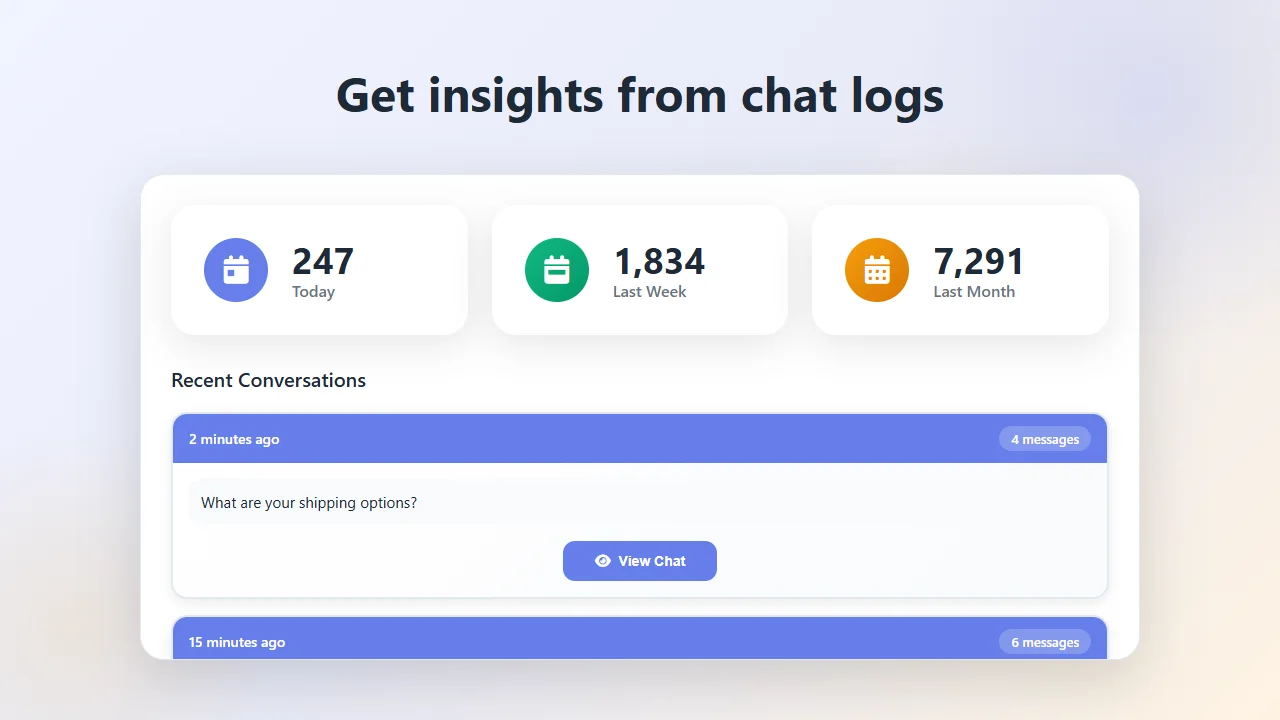
Analytics from the chatbot reveal patterns that reservation data alone cannot. You see which dishes generate the most questions before a visit, which allergens guests ask about most often, which policy details cause confusion, which hours visitors most frequently check, and how many reservation requests come in after closing time. Over a quarter, those patterns become actionable intelligence: if guests keep asking whether the brunch menu is available on weekdays, maybe it should be. If allergen questions spike around a particular dish, the menu listing needs clearer ingredient disclosure. If late-night reservation requests consistently go unfulfilled because the kitchen closes early, there is a revenue opportunity sitting in the data. The chatbot is not just answering questions; it is surfacing the questions your website and your operations have not yet answered on their own.
Multi-location restaurant groups benefit from the per-site architecture in a way that matters operationally. Each property gets its own dedicated chatbot with its own menu, its own hours, its own allergen data, and its own reservation routing. The downtown flagship and the suburban brunch spot do not share a knowledge base, because they do not share a menu. The fine-dining venue and the fast-casual concept under the same ownership do not share a voice, because their guests expect different tones. Asyntai scopes every configuration per site — one on the free plan, two on Starter, three on Standard, up to ten on Pro — so a restaurant group with five concepts runs five distinct chatbots under a single account, each reflecting the individual property's brand and operations.
Pricing aligns with how restaurants actually grow their use of a chatbot. The free tier — 100 conversations a month, one site — is enough for a quiet neighborhood spot to test whether the technology fits the guest experience. A single-location restaurant with moderate web traffic usually fits comfortably within the $39 monthly plan and its 2,500 conversations. Busier venues and multi-unit groups move up to higher tiers that stretch into significant volume. There are no per-seat fees, which matters for restaurants where the GM, the host, the events coordinator, and the owner all want visibility into what guests are asking. Everyone logs in and reviews conversations without adding to the bill.
Rolling out an AI chatbot for restaurants is not a technology project — it is a Tuesday-afternoon task. Register, copy the snippet, paste it into your site header, point the chatbot at your restaurant URL, upload the allergen matrix and any internal documents, write the reservation-handling rules and the catering-qualification protocol, test with ten realistic guest questions, and publish. By dinner service that evening, the chatbot is fielding menu questions, capturing reservation requests, qualifying private event leads, and answering "are you open right now?" in thirty-six languages — while your team stays exactly where they should be: in the dining room, in the kitchen, and on the floor.